
Google's Privacy Update Opens Gmail and Photos to Ad Targeting
Google has changed its privacy policy so that data from Gmail, Drive and Photos can inform personalized ads if you connect them to AI features like Personal Intelligence. Here is what marketers and business owners should understand and do.
Rajesh Kumar · 26 Oct 2026 · 3 min read

- Google's privacy policy now says Drive, Gmail and Photos data can be used for personalized ads if you make it available to other Google services that support them.
- The change affects users who connect those apps to AI Mode and Search through Personal Intelligence, so it is opt-in.
- Advertisers do not get access to your content or personal identifiers, and sensitive categories like health and religion are excluded.
- Users can disconnect apps or turn off Personalized Recommendations in the Search Services Personalization settings.
- Marketers should expect more personalized search experiences and keep first-party data and consent practices strong.
Google has quietly changed one line in its privacy policy, and it matters more than it looks. According to a report from The Verge, citing a catch by Android Authority, Google now carves out an exception to its long-standing promise not to use Drive, Gmail or Google Photos for personalized ads.
What actually changed
The old wording was simple: Google would not use data from those services to personalize ads. As of October 16th, the policy adds a condition: that holds true "unless you choose to make data from these services available to other Google services that support personalized ads."
In practice, this applies to people who connect Drive, Gmail or Photos to AI Mode and other Search tools through the Personal Intelligence feature. That connection lets Google's AI give more tailored answers. It also means that content may now feed ad personalization.
What Google says stays protected
The source is clear about the limits. Advertisers do not get access to your Drive, Gmail or Photos content, and they do not receive personally identifying details such as your name or email address. Google also says it will not show ads based on sensitive categories like race, sexual orientation, religion or health.
The key word is choice. This is an opt-in connection, not an automatic switch for every Gmail user. Users can disconnect specific apps from Personal Intelligence, or turn off Personalized Recommendations on the Search Services Personalization settings page.
Why it matters for marketers
This is a signal about direction. AI assistants get better when they know more about the user, and that personal context is also extremely valuable for ad targeting. Google is now saying openly that the two are linked.
For advertisers, the likely implication is richer personalization signals inside Google's ecosystem for users who opt in. I would not read that as a sudden jump in performance. The source gives no numbers, no rollout scale and no advertiser-facing changes. But the principle is worth tracking.
For SEO and content teams, the bigger point is that AI Mode answers may become more personal. Two people asking the same question could see different results and different ads. That makes rank tracking and "what do customers see" research harder to pin down.
Why it matters for consumers and trust
Many people will connect their inbox or photo library to an AI tool to get convenience, without reading the policy implications. The trade-off, better answers in exchange for broader ad personalization, is now written into the terms.
If you run a brand that depends on customer trust, expect questions. Customers may ask how their data is used, and they will compare your practices with those of the big platforms.
Practical actions
For business owners and marketers:
- Review your own Google account settings. Check whether Personal Intelligence is connected to Gmail, Drive or Photos, and decide deliberately.
- Check the Search Services Personalization page and set it the way you want, especially on shared or work accounts.
- Brief your team. If staff use Workspace apps, they should know what connecting them to Search or Gemini could mean.
- Do not promise clients targeting capabilities that Google has not announced. Nothing in the source says advertisers get new controls.
For ecommerce and ad teams:
- Keep first-party data, email lists and clear consent practices in good shape. Platform-side personalization will not replace your own customer relationships.
- Treat audience and search results as variable. Test ads and landing pages across intent types rather than assuming one view of the results page.
- Write privacy copy in plain language. Clear explanations build trust when users are growing wary of data use.
The bottom line
This is a modest wording change with a big strategic message: AI personalization and ad personalization are now formally connected at Google. The protections are real, with no advertiser access to content or identity and exclusions for sensitive categories, but the decision sits with the user. Marketers should watch how this develops, and everyone should check their settings.
Raj's takeThis is Google being honest about a trade-off that was always coming: the more an AI knows about you, the more valuable that knowledge is for ads. I would not panic, since it is opt-in and the source describes real guardrails, but I would check my own settings today. For marketers, the lesson is to build your own customer data and trust rather than depend on whatever signals the platforms decide to share.
Want this applied to your business?
Related
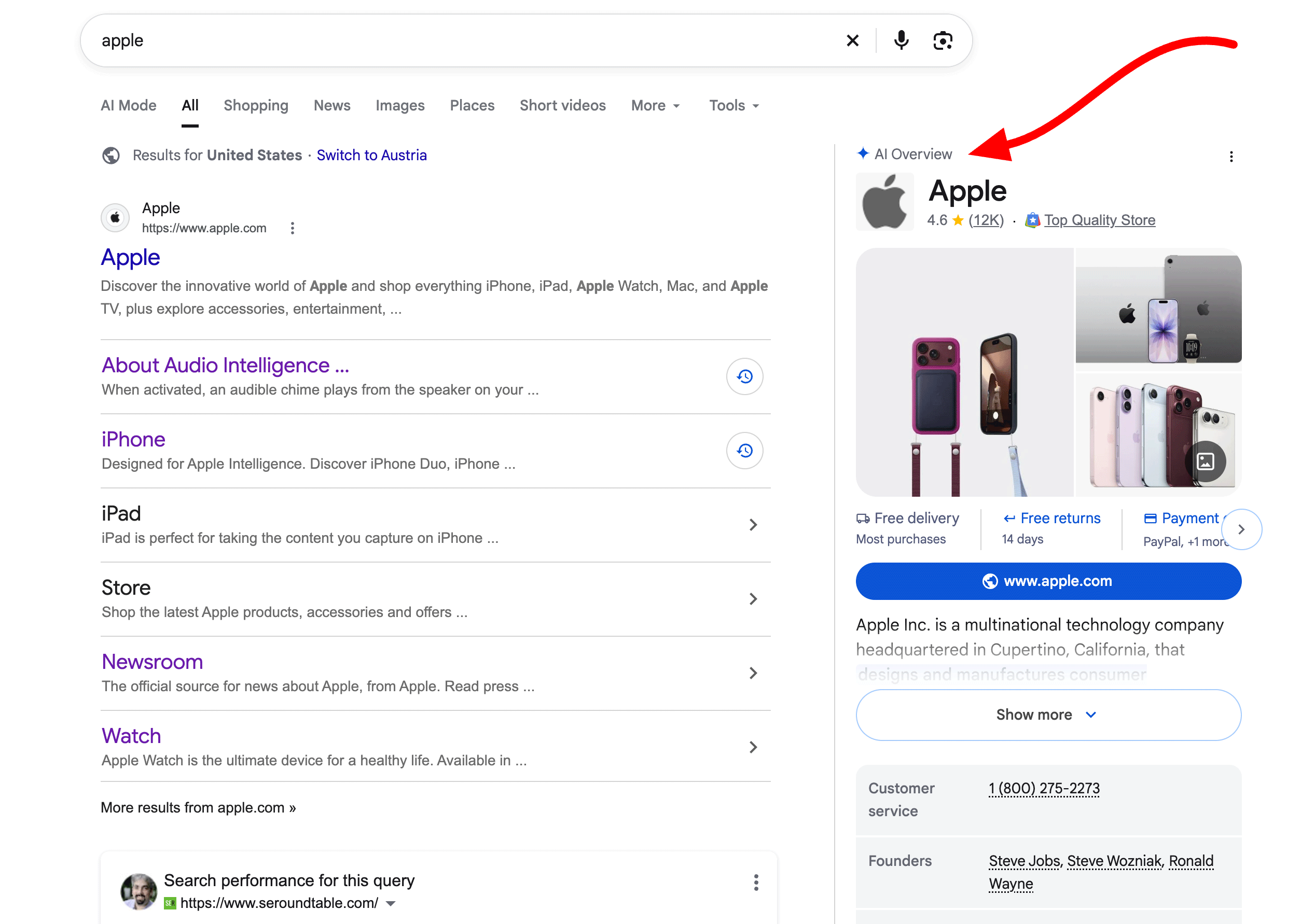
Google Moves Brand AI Overviews to the Right Column
Google is showing AI Overviews for many brand searches in the right-hand column, where Knowledge Panels used to sit. Brands now have less control over a prominent summary of who they are.
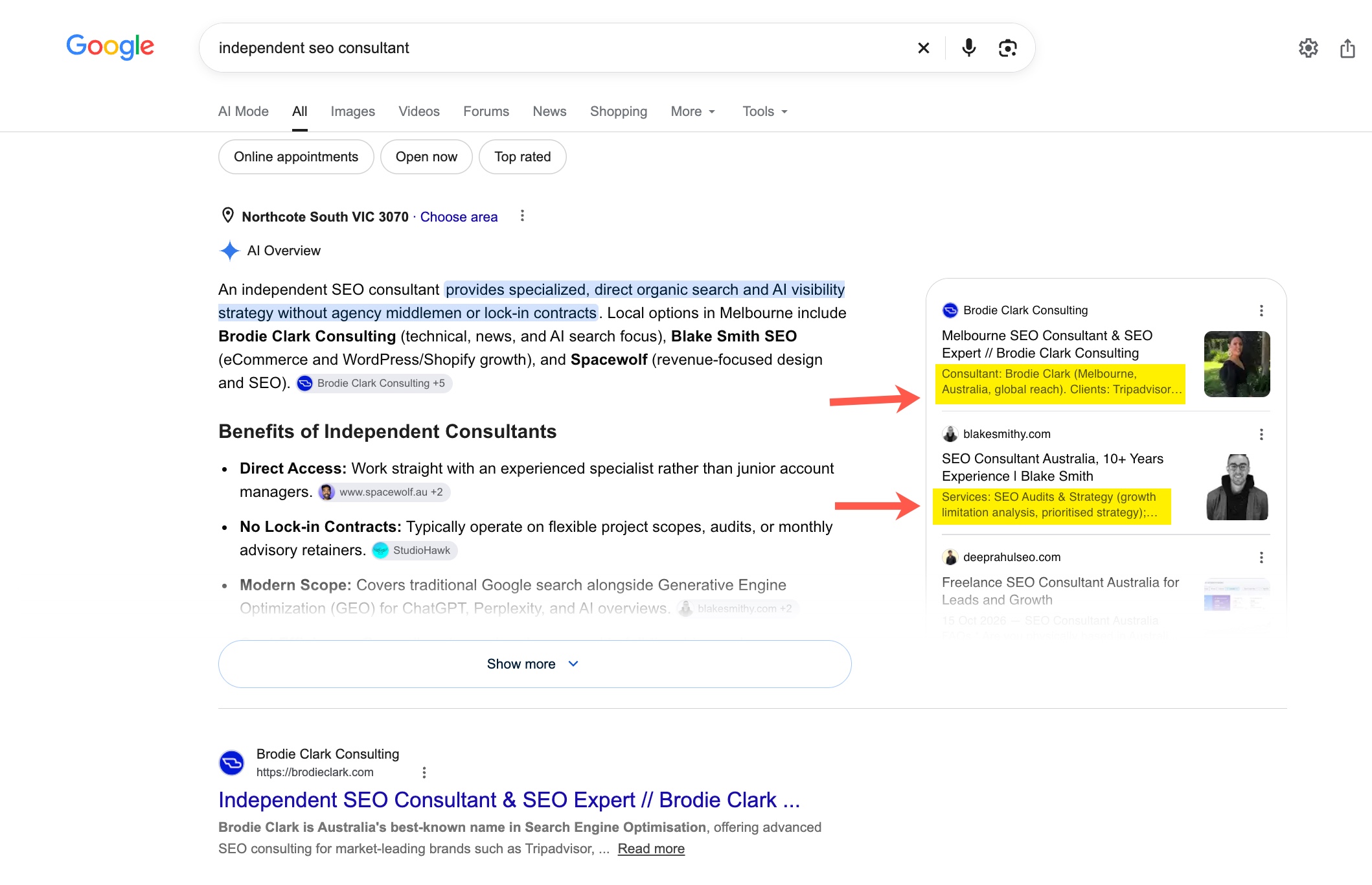
Google AI Overviews Now Summarise Your Page in Citation Cards
Google appears to be testing AI-generated summary snippets inside the citation cards of AI Overviews. The text shown may not match your page, which changes how your content is represented in search.
Google AI Overviews Now Summarise Your Page in Citation Cards
Google appears to be testing AI-generated summary snippets inside AI Overview citation cards. The text shown may not match your page, which changes how brands think about being cited.