
Google AI Overviews Now Summarise Your Page in Citation Cards
Google appears to be testing AI-generated summary snippets inside AI Overview citation cards. The text shown may not match your page, which changes how brands think about being cited.
Rajesh Kumar · 26 Oct 2026 · 3 min read
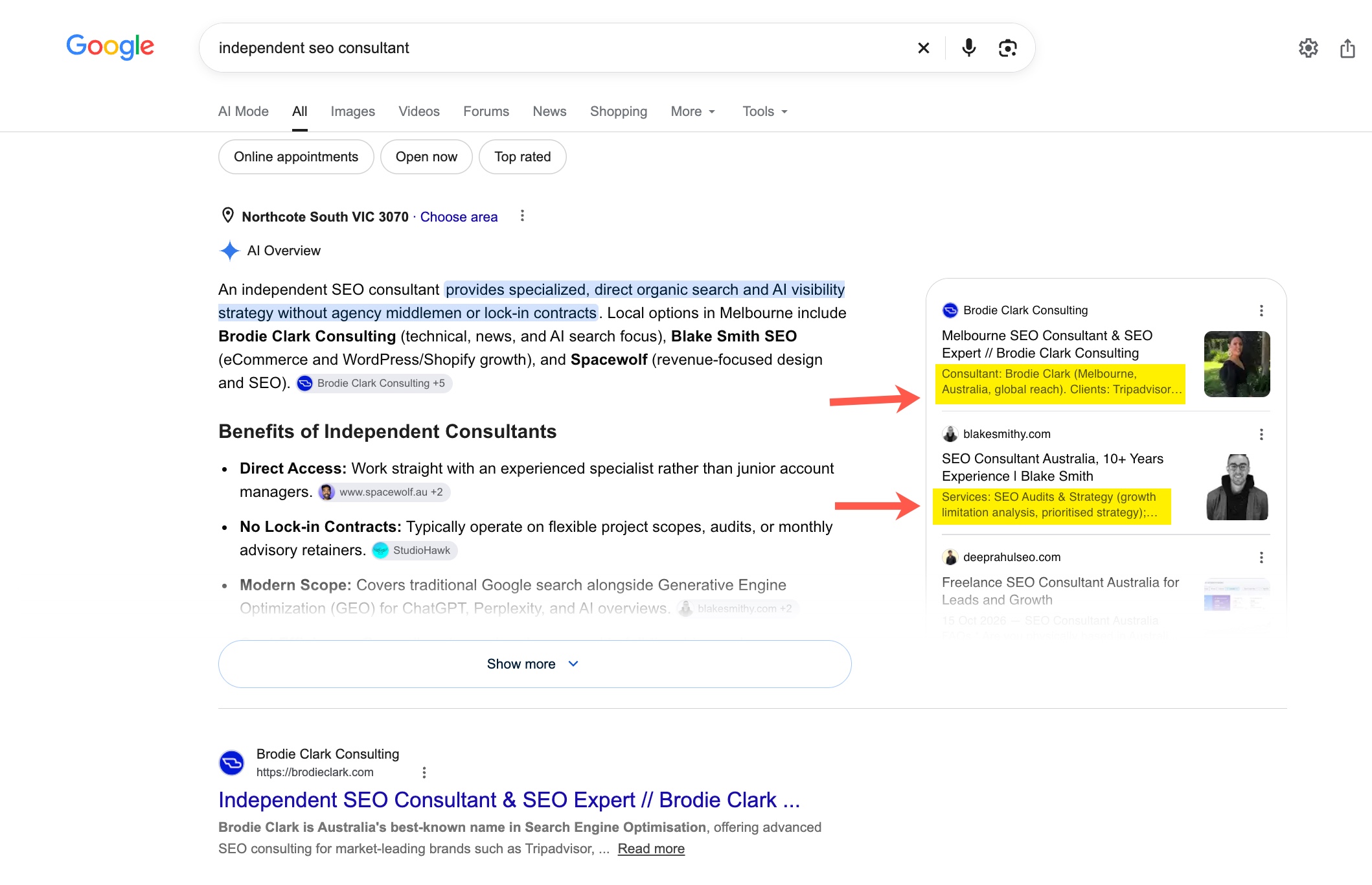
- Google appears to be testing AI-written summary snippets inside AI Overview citation cards.
- The summary text may not appear verbatim on your page; Google picks what it deems most relevant to the query.
- Search Engine Roundtable saw it on some test queries but not all, so it looks like a test or partial rollout.
- Clear, well-structured pages with specific facts should be easier to summarise accurately.
- Audit your cited pages now and monitor clicks, but avoid big strategy changes based on a test.
What happened
Google seems to be testing, or slowly rolling out, AI-written descriptions inside the citation cards that sit beside (or below) AI Overviews in Search. Until now, those cards mostly pointed to a source. Now some of them carry a short summary of what the page says.
According to Search Engine Roundtable, the change was first spotted by Brodie Clark, who noted that the text does not appear word for word on the cited page. Google seems to be summarising the content based on what it considers most relevant to the query. Barry Schwartz said he sees it on some of his test queries, but not all, which points to a test or a partial rollout.
That is about all we know. There is no official announcement in the source, no numbers on how widely it is live, and no detail on how Google chooses what to summarise.
Why it matters
The citation card used to be a fairly passive element. It showed a link and maybe a title. If Google now writes the description, it is effectively adding a second layer of AI between your page and the searcher.
Three implications stand out.
You lose some control over your message. Your meta description and your carefully written intro may not be what people read. Google decides which part of your page answers the query and rewrites it.
Being cited may become more valuable, and more ambiguous. A card with a useful summary could earn a click from someone who wants more detail. It could also satisfy the person without a visit. We do not have data to say which one wins, so be careful with anyone who claims to know.
Page structure matters more. If Google is pulling the information it thinks is most relevant, then pages with clear, specific, well-organised answers are easier to summarise accurately. Vague pages invite a vague or wrong summary.
What to do now
Do not rebuild your strategy around a test that only some people can see. But a few low-cost checks make sense.
1. Audit your own citations. Run your key queries, especially commercial and informational ones, and look at whether your pages appear in AI Overview cards. Screenshot what the summary says. Compare it with your page.
2. Look for mismatches. If the summary emphasises the wrong thing, such as a minor feature instead of your main offer, check whether the page leads with that minor point. Often the fix is editorial, not technical.
3. Make key facts easy to extract. Put the answer near the top of the relevant section. Use clear headings, plain language, specific details like pricing rules, shipping times, or product specs, and keep them consistent across the page.
4. Track clicks separately. In Search Console, watch impressions and clicks for pages that are being cited. If impressions hold and clicks fall, that may be a sign the summaries are doing more of the work. Treat that as a hypothesis, not proof, since Search Console does not break out this card.
5. For ecommerce, protect accuracy. Product pages and category pages with unclear or conflicting information are the biggest risk. Make sure stock status, delivery policy, and returns terms are stated clearly, so a summary is less likely to misrepresent them.
The bigger picture
This fits a pattern: Google keeps moving more of the answer into the results page itself. The practical response is the same as before. Be the source that is clear, accurate, and worth clicking through to, because the page still has to deliver once someone arrives.
I will be watching for more detail from Google and for broader reports on how often these summaries appear.
Raj's takeThis is one more step toward Google presenting your content in its own words, and marketers should treat it as a reason to tighten page clarity rather than panic. I would not read too much into a limited test, but I would check how my key pages are being described today. If the summary gets your offer wrong, that is a content problem you can fix.
Want this applied to your business?
Related
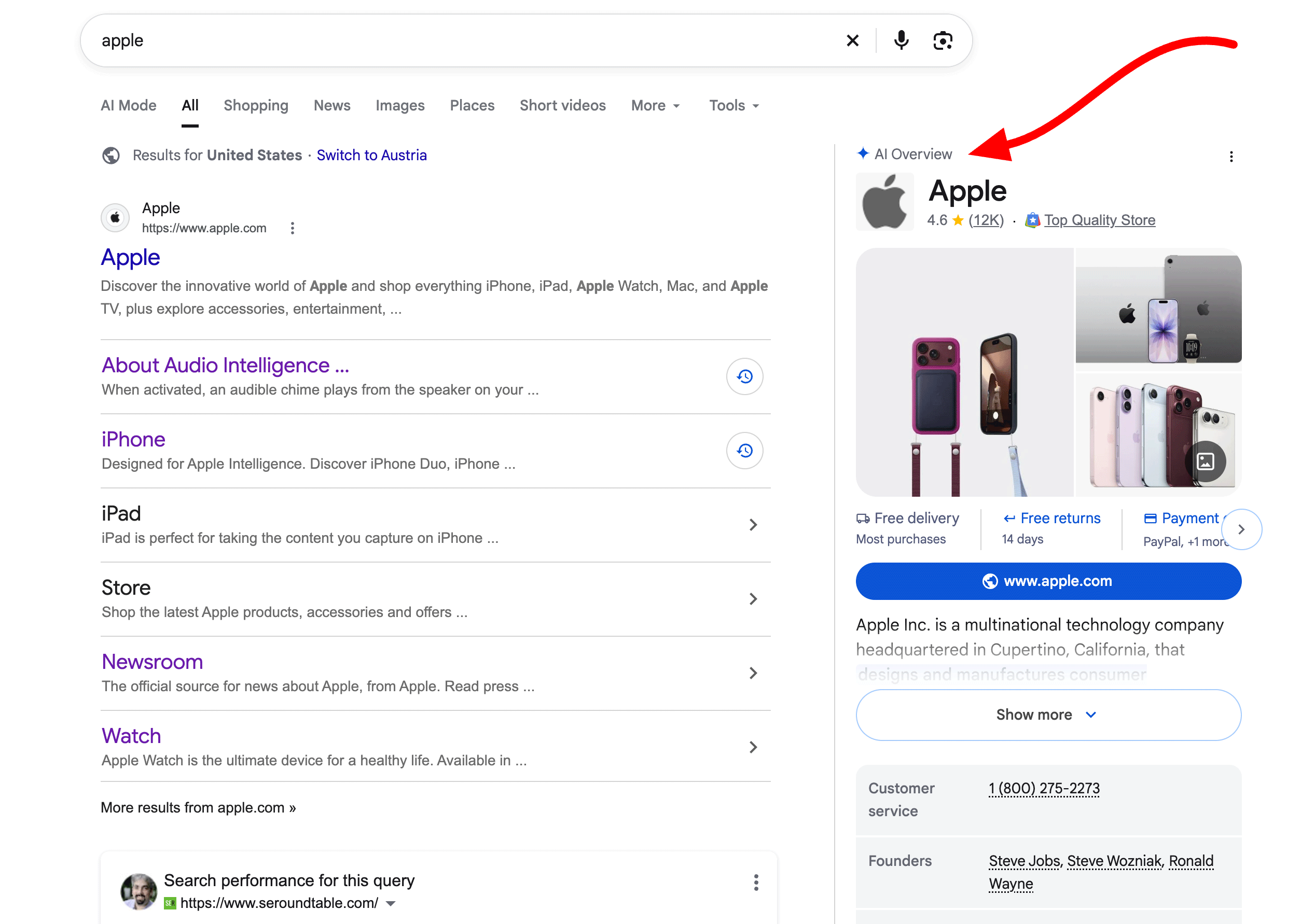
Google Moves Brand AI Overviews to the Right Column
Google is showing AI Overviews for many brand searches in the right-hand column, where Knowledge Panels used to sit. Brands now have less control over a prominent summary of who they are.

Google's Privacy Update Opens Gmail and Photos to Ad Targeting
Google has changed its privacy policy so that data from Gmail, Drive and Photos can inform personalized ads if you connect them to AI features like Personal Intelligence. Here is what marketers and business owners should understand and do.
Google AI Overviews Now Summarise Your Page in Citation Cards
Google appears to be testing AI-generated summary snippets inside the citation cards of AI Overviews. The text shown may not match your page, which changes how your content is represented in search.