
Technology evolves. Human psychology endures.
Let’s be honest — 2026 is a strange time to be a marketer.
AI is writing content. Automation is handling campaigns. Analytics dashboards are updating in real time. And yet, many businesses are growing slower than ever, not faster. More tools, more noise, less clarity.
Here’s what I’ve come to believe after nearly three decades in this industry: the marketers winning right now aren’t the ones with the best software. They’re the ones who understand people.
1. Your Tools Are No Longer Your Edge
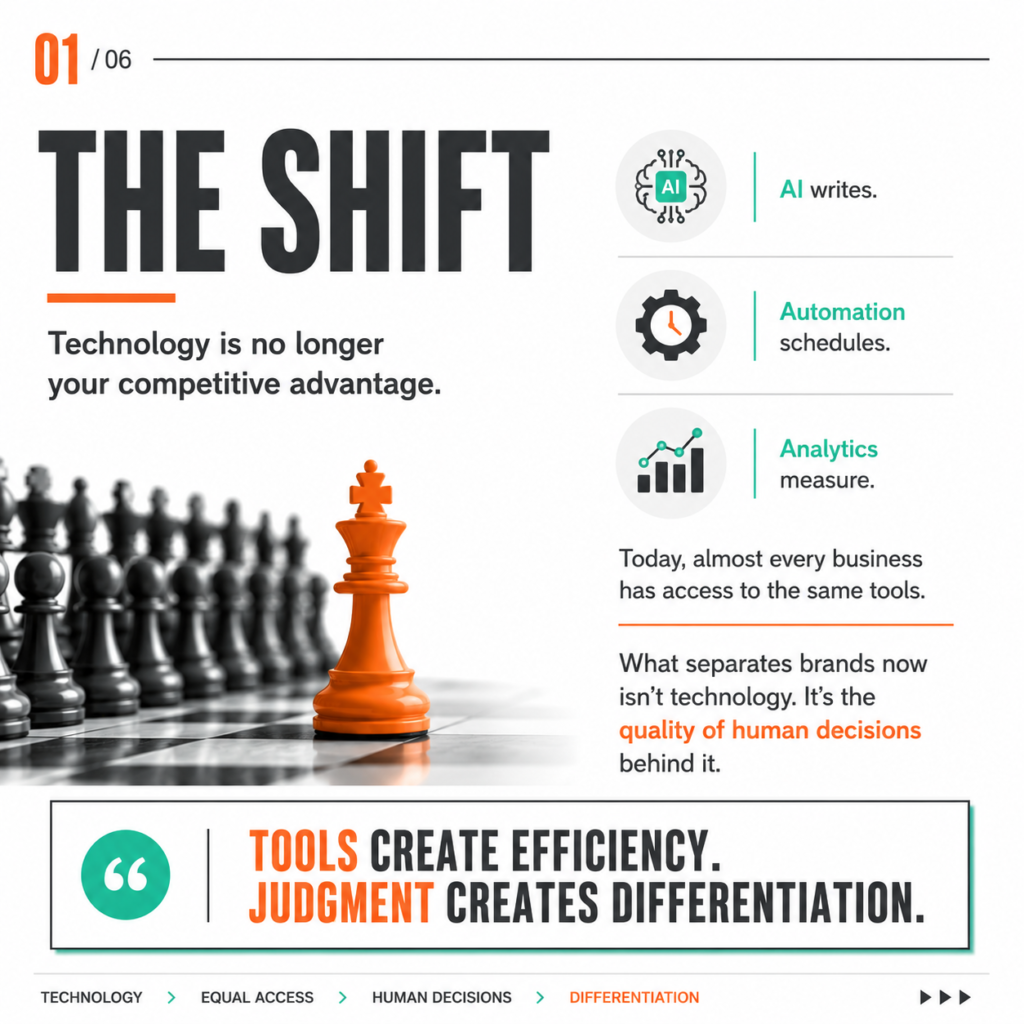
Think about it this way. Five years ago, knowing how to use AI-generated content gave you a head start. Today, your competitor three doors down is using the same tool, the same prompts, and publishing twice as fast as you.
Access to technology has been democratised. That’s genuinely exciting — but it also means technology alone can no longer set you apart.
What does? The decisions you make with those tools. The empathy behind your messaging. The judgment that no algorithm can replicate.
AI can write a thousand articles. It can’t feel what your audience is going through at 11pm when they’re Googling for a solution to a problem that’s keeping them up at night.
Tools create efficiency. Human judgment creates differentiation.
2. Are You Busy — Or Are You Actually Making Progress?
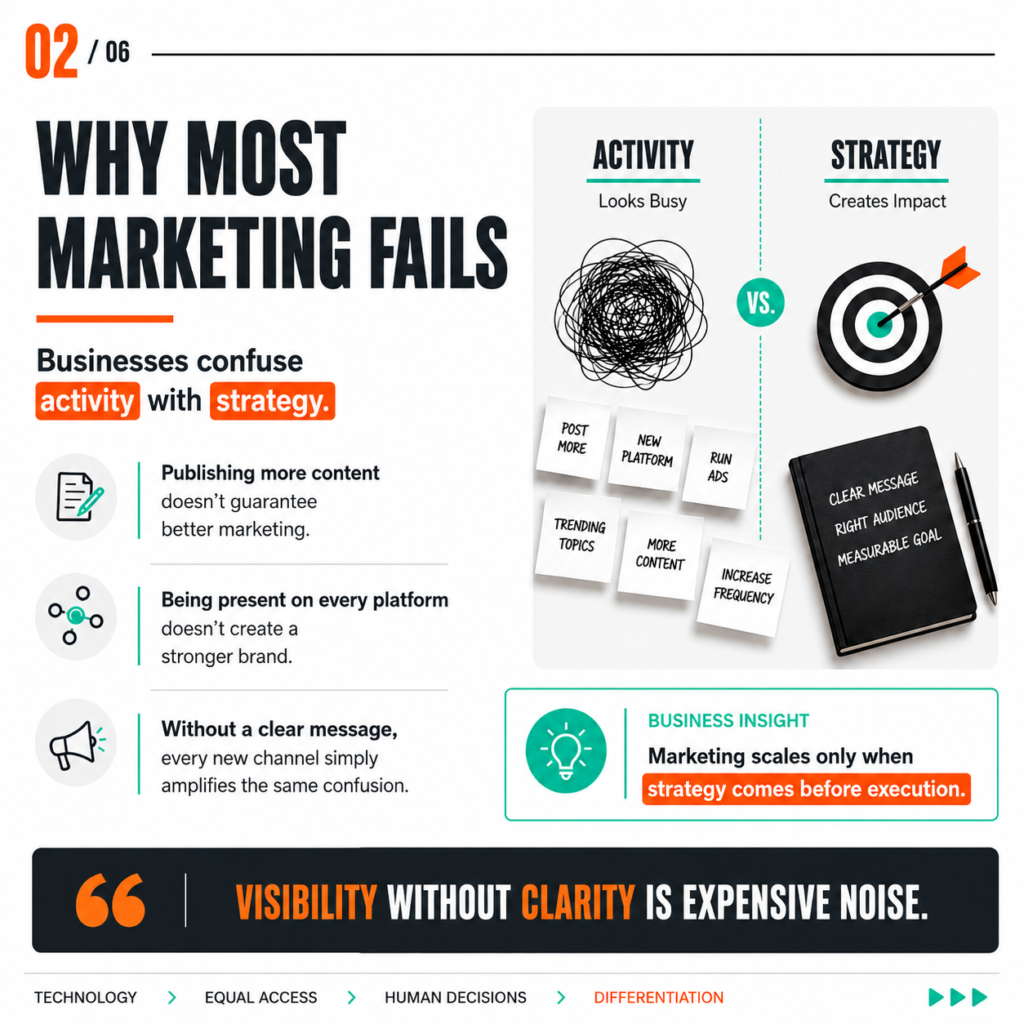
Here’s a question worth sitting with: How much of your marketing effort this week was activity, and how much was strategy?
Most businesses I’ve seen fall into the same trap. Post more. Try a new platform. Run another ad. Jump on the latest trend. It feels productive. It rarely is.
The real problem usually isn’t output. It’s clarity. When your message isn’t sharp and your audience isn’t defined, doing more simply amplifies the confusion.
Before you ask “How do we create more content?” — ask this instead: “What problem are we actually solving, and why should someone trust us to solve it?”
That shift in thinking changes everything downstream.
Visibility without clarity is expensive noise.
3. What Actually Moves People to Buy
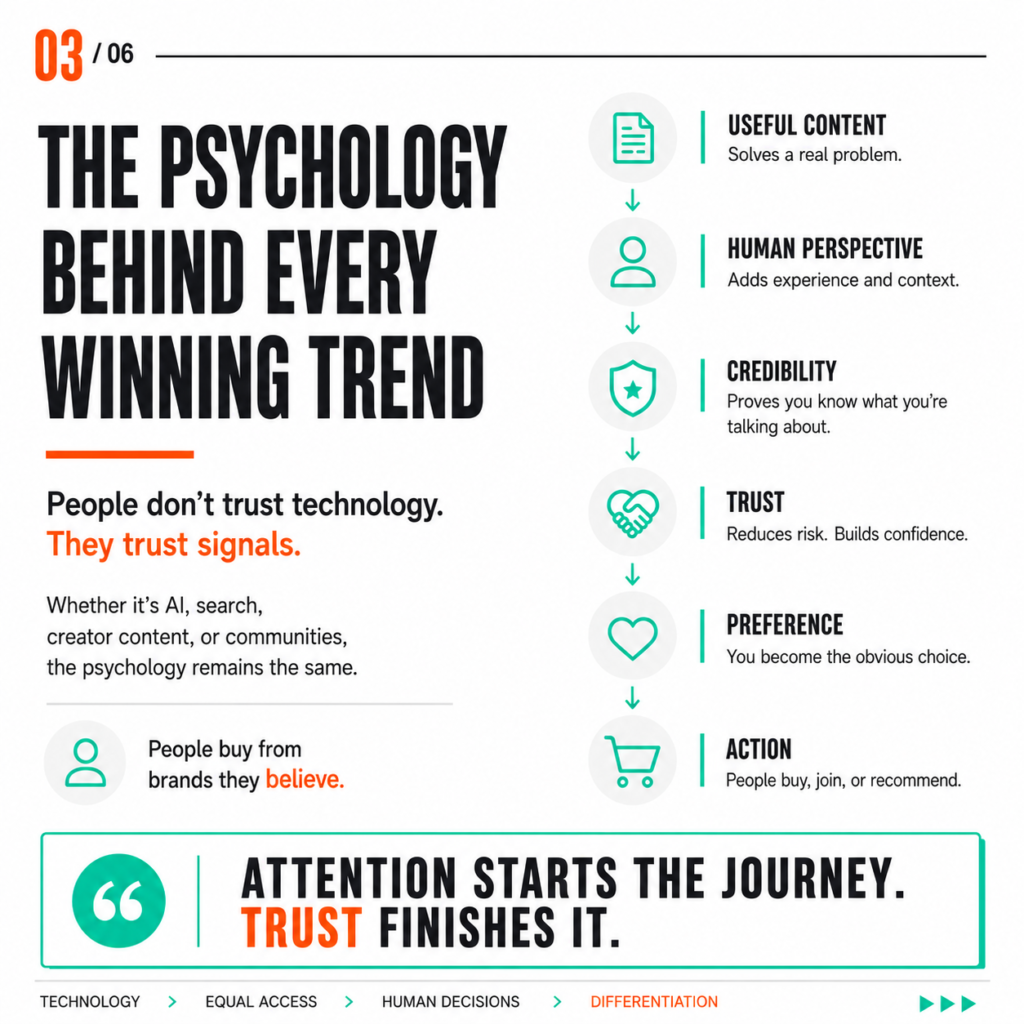
Here’s something that never gets old: people don’t trust platforms. They don’t even trust brands, not really — not at first. They trust signals.
Whether someone finds you on Google, Instagram, LinkedIn, YouTube, or through an AI-powered answer, the psychology is the same. They’re quietly asking:
“Can I trust these people? Do they understand my problem? Is this worth my time and money?”
What answers those questions isn’t your logo or your ad spend. It’s:
- Content that genuinely helps — not content that fills a calendar
- Your perspective and experience — the human context AI can’t fake
- Proof that you know what you’re talking about — credibility earns trust faster than any campaign
- Consistency — showing up reliably until the risk of choosing you feels low
- A clear reason to choose you over everyone else saying the same thing
The customer journey has always looked like this:
Attention → Trust → Preference → Action
Platforms come and go. That path doesn’t change.
4. Stop Running Campaigns. Start Building Systems.
I’ll be honest — I used to chase channels. New platform launches, algorithm changes, whatever the marketing world was excited about that quarter.
What changed my thinking was this: the businesses I admired most weren’t reacting to trends. They were operating from systems that made trends largely irrelevant.
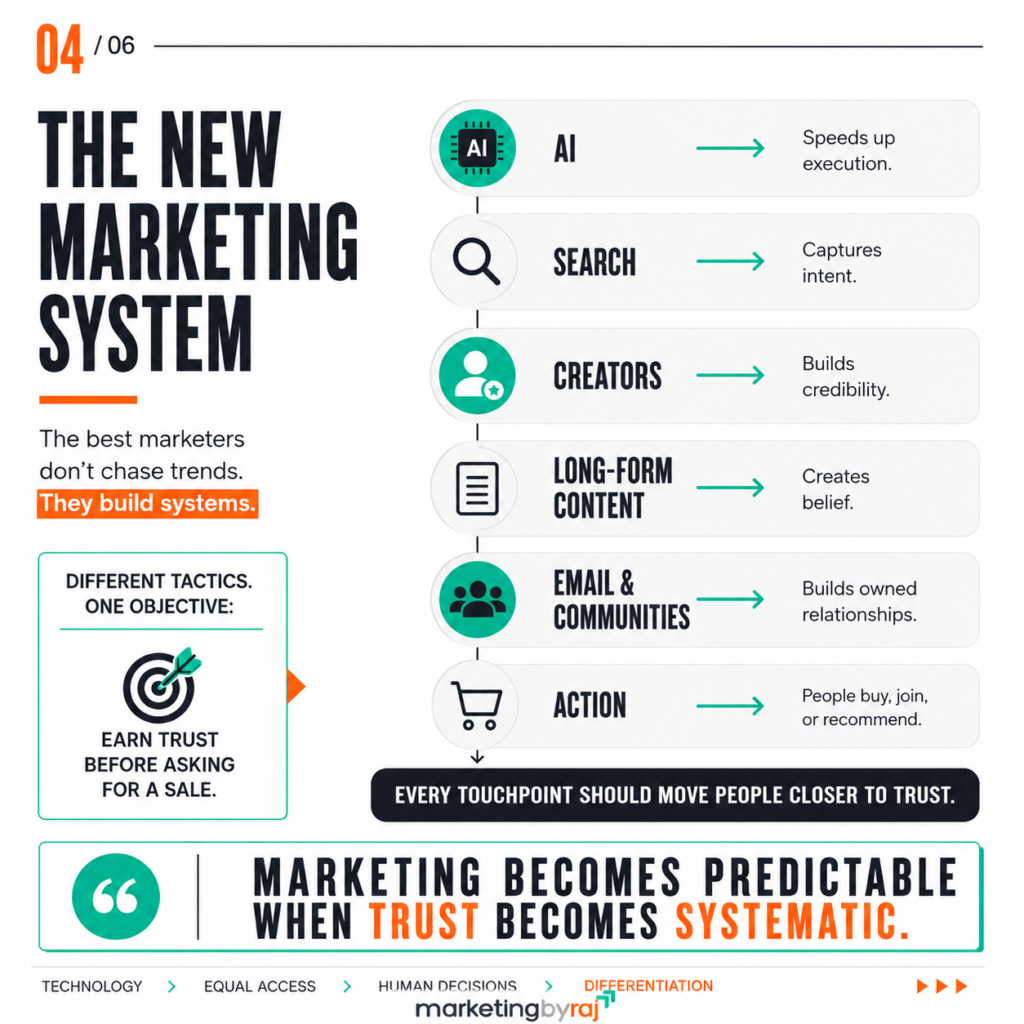
A good marketing system isn’t complicated. It layers channels that complement each other — search capturing people who are actively looking, long-form content building authority over time, genuine creator partnerships adding credibility, email and communities building audiences you actually own rather than rent.
AI fits into this beautifully. It speeds up execution. It helps you do more with less. But it doesn’t replace the thinking that connects it all.
Every touchpoint has one job: move someone one step closer to trusting your business. Earn that trust before you ask for a sale. When trust becomes part of the system, growth stops feeling random.
5. A Simple Test Before You Try Anything New
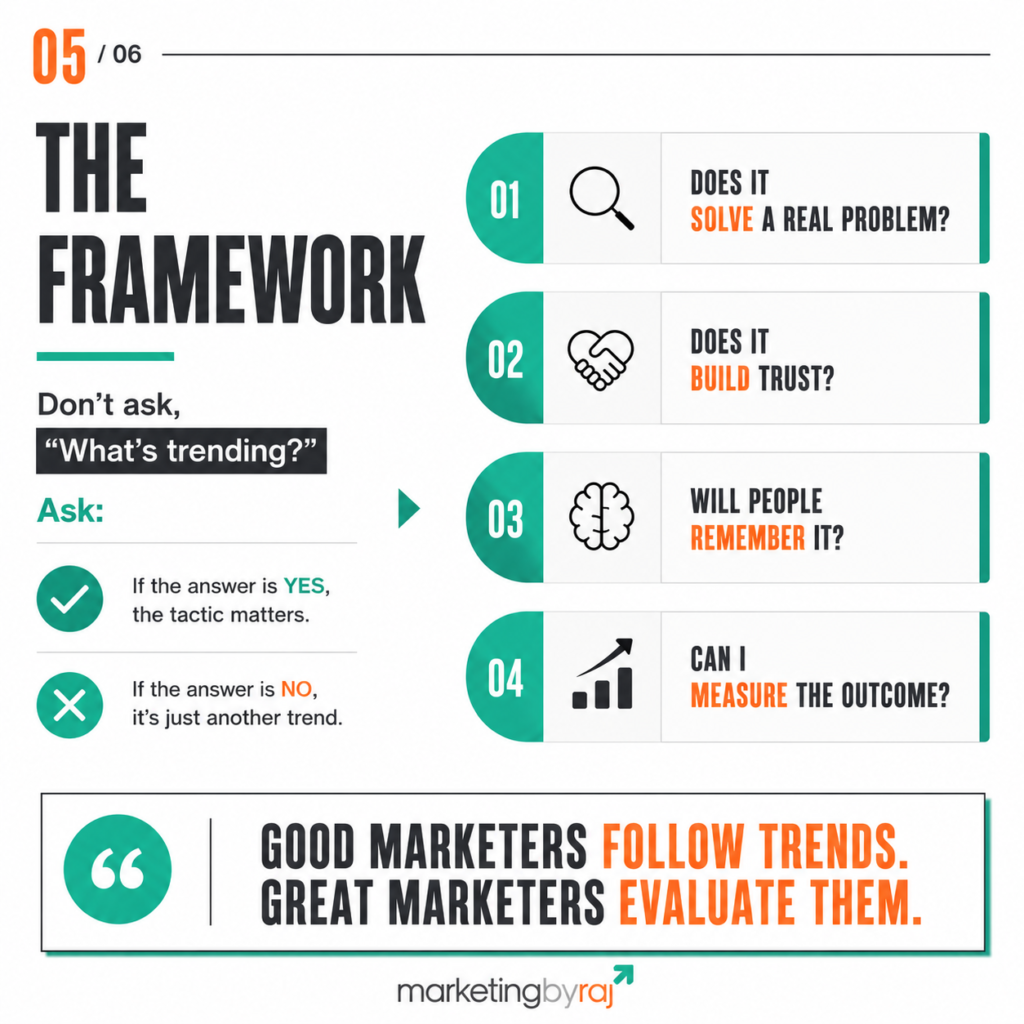
Next time a new platform, format, or tactic crosses your feed — and something will, probably this week — run it through these four questions before you commit:
- Does it solve a real problem for my audience? If not, how viral it gets won’t matter.
- Does it build trust? Because trust is what buying decisions are actually built on.
- Will people remember it? Memorable brands make emotional connections, not just impressions.
- Can I measure what it does for my business? If you can’t connect it to an outcome, it’s decoration.
Four yeses? Worth your time. Anything less? It’s a trend, and trends pass.
Good marketers follow trends. Great marketers evaluate them.
Here’s What I Really Want You to Take Away
After 27 years in digital marketing, this is the thing I keep coming back to:
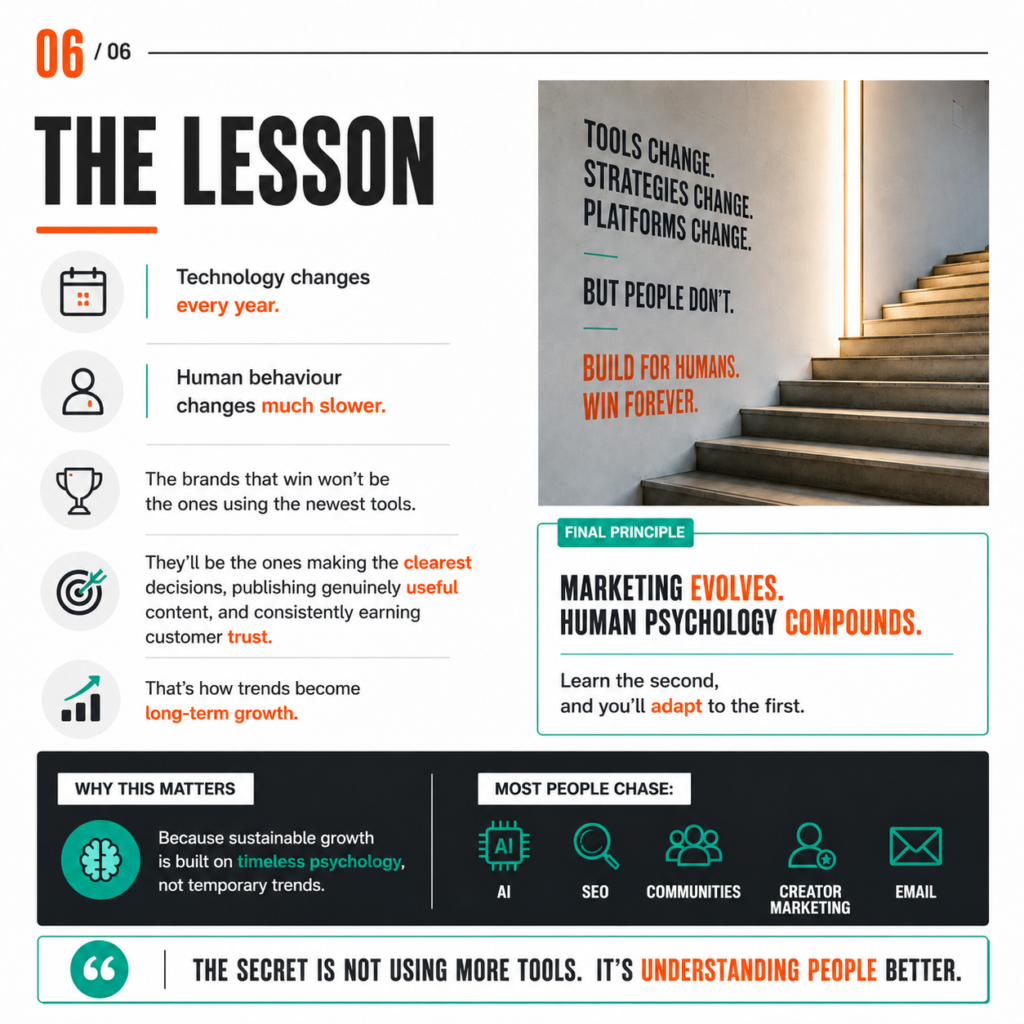
Technology changes fast. Human behaviour changes slowly.
The businesses that spend their energy chasing every new tool will always be reacting. The businesses that invest in genuinely understanding their customers will keep compounding — quietly, consistently, year after year.
The brands that lead the next decade won’t be the ones with the most advanced AI stack. They’ll be the ones who made clearer decisions, published content that actually helped people, and earned trust so consistently that choosing them became the obvious move.
Tools will change. Strategies will evolve. Platforms will rise and fall.
But people will always be looking for clarity, credibility, and someone they can trust before they hand over their money or their attention.
That’s not changing. Build for that.