
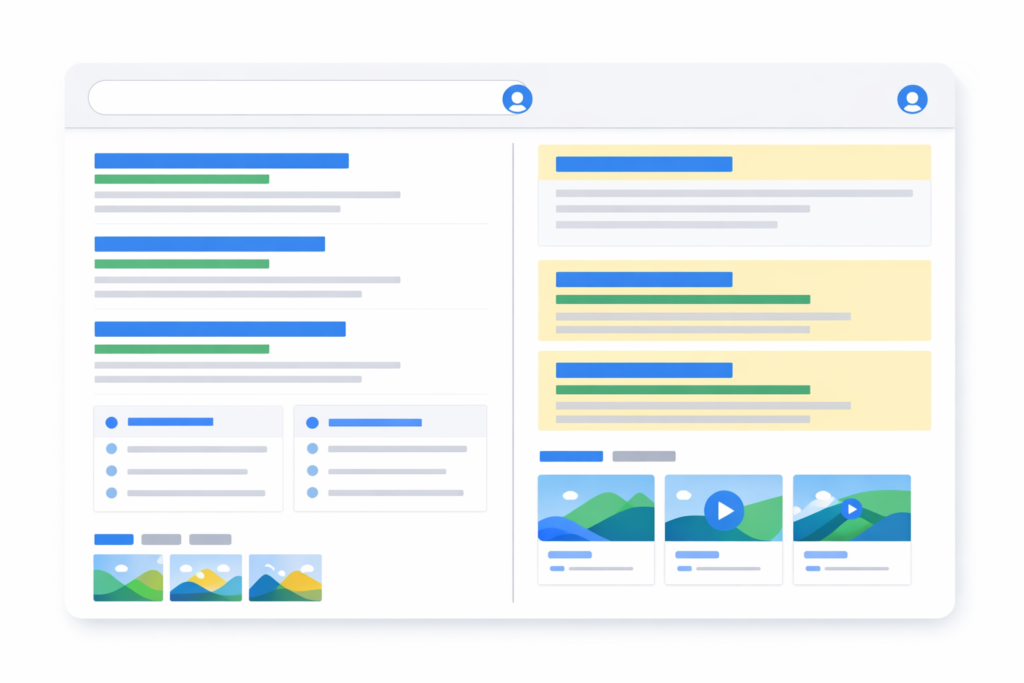
When you search for something on Google, the page you see with results is called a Search Engine Results Page (SERP).
Understanding how SERPs work helps you rank better, get more clicks, and drive the right traffic to your website.
What Is a SERP?
A SERP is the page displayed by a search engine after a user enters a query.
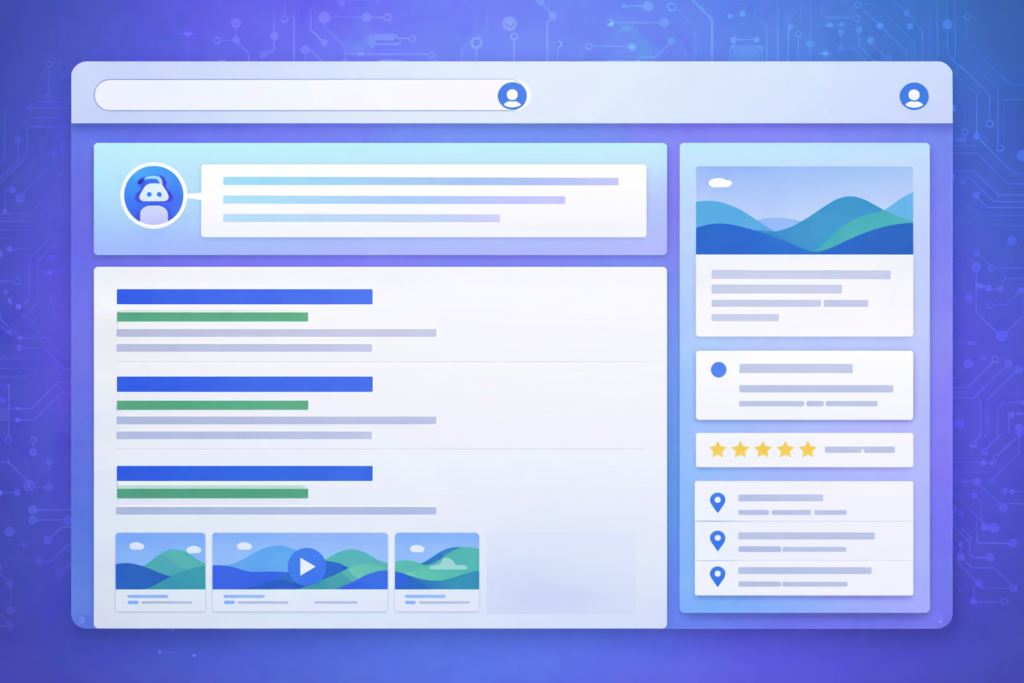
It contains organic results, paid ads, and special features designed to give users fast and relevant answers.
Main Elements of a SERP
1. Organic Search Results
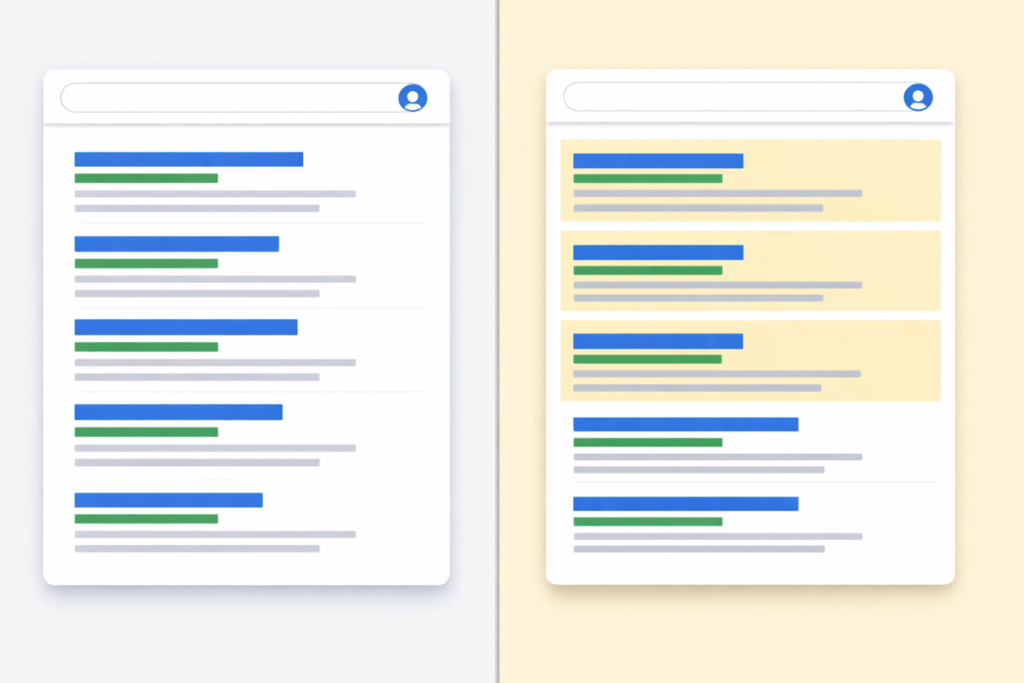
These are unpaid listings ranked based on relevance, content quality, authority, and user experience.
- Title tag
- URL
- Meta description
👉 Strong SEO helps pages rank here.
2. Paid Search Results (Ads)
These appear at the top or bottom of the page and are marked as Sponsored.
- Businesses pay per click (PPC)
- Instant visibility, but not long-term authority
3. Featured Snippets
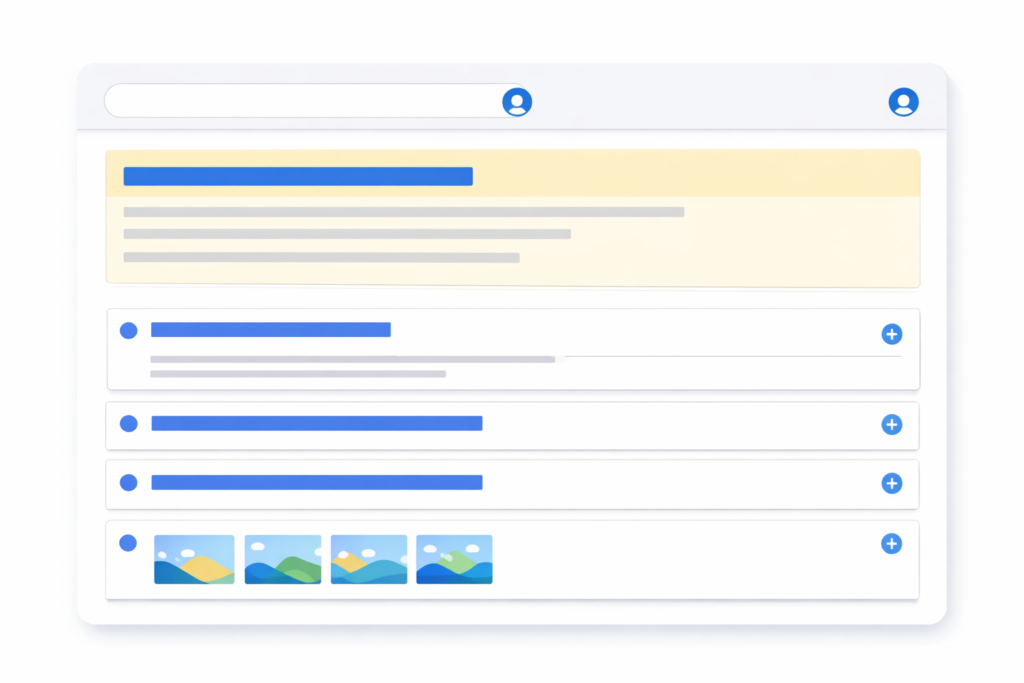
A highlighted answer box that appears above organic results.
- Pulls content directly from a webpage
- Often called “Position Zero”
- Can dramatically increase visibility and clicks
4. People Also Ask (PAA)
Expandable question boxes related to the search query.
- Great opportunity for FAQ-based content
- Helps build topical authority
5. Rich Results & SERP Features
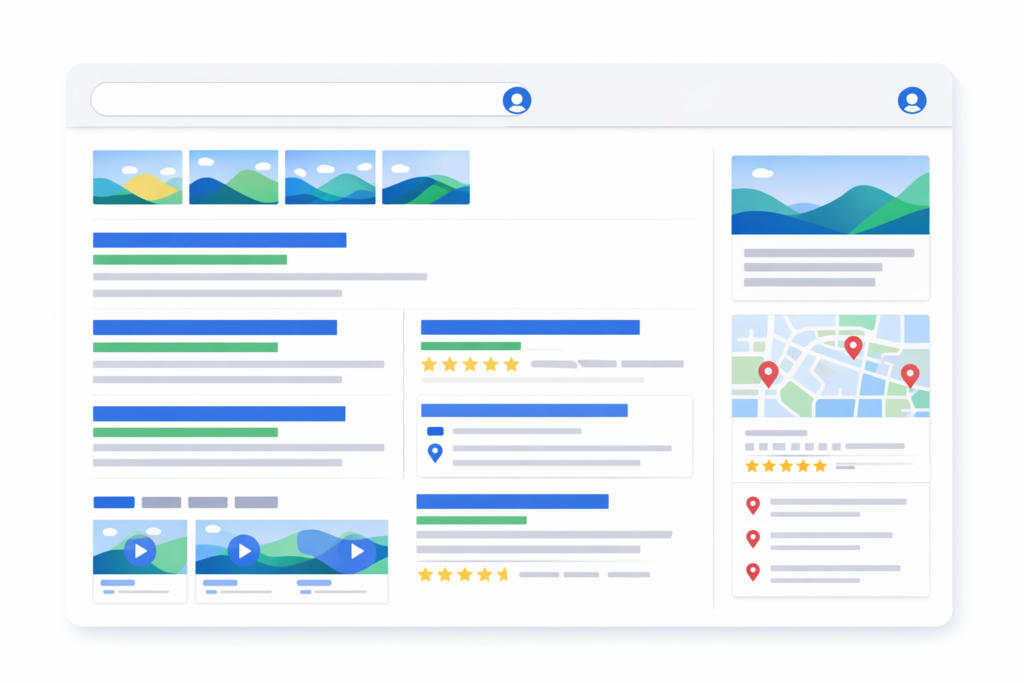
Depending on the query, SERPs may include:
- Images
- Videos
- Reviews & star ratings
- Local map packs
- Knowledge panels
These features improve click-through rate (CTR) even if rankings stay the same.
Why SERPs Matter for SEO & Digital Marketing
Understanding SERPs helps you:
- Optimize content for visibility, not just rankings
- Target featured snippets and PAA boxes
- Decide when to use SEO vs paid ads
- Design content for AI-driven search results
Modern SEO is about owning more SERP space, not just being #1.
SERPs in the AI Era
Search results now include AI summaries, conversational answers, and visual results.
This means:
- Structured content performs better
- Clear headings and FAQs are critical
- Authority and trust signals matter more than ever
Key Takeaway
A SERP is no longer just “10 blue links.”
It’s a dynamic ecosystem where smart content strategy, SEO, and user intent decide who gets noticed.