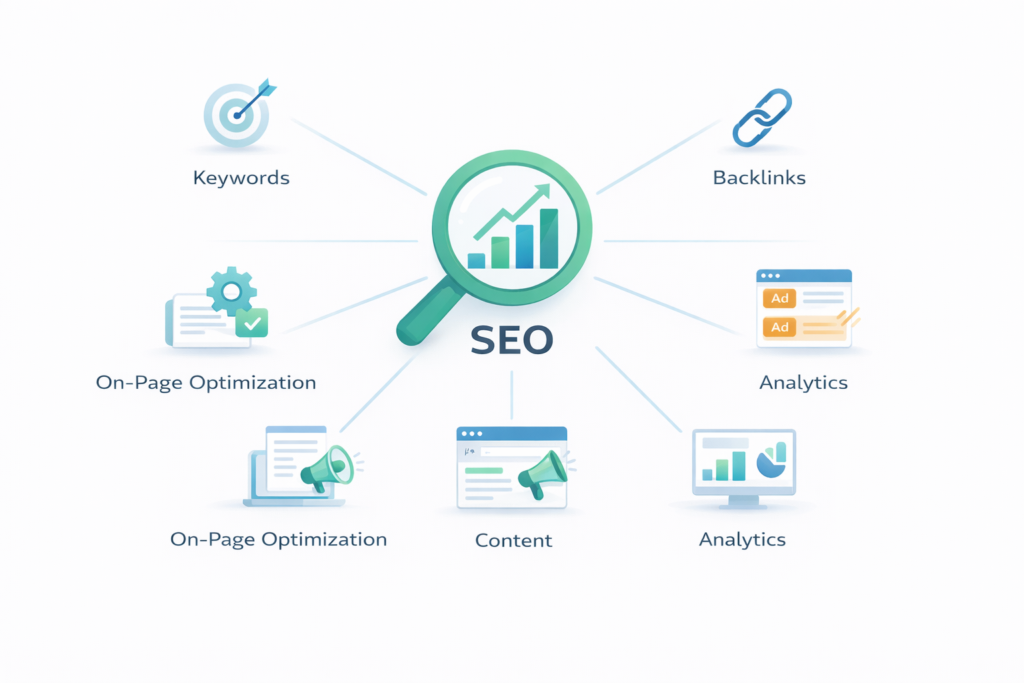
Organic vs. Paid Search Strategy Explained (With Infographics)
Search engines are where most customer journeys begin. But when it comes to visibility on Google, businesses often face a common question:
Should I invest in SEO or SEM?
The short answer: they’re different tools with different strengths.
This guide explains SEO vs. SEM in simple terms, shows how organic and paid search actually work, and helps you decide which strategy fits your goals.
What Is SEO? (Organic Search)
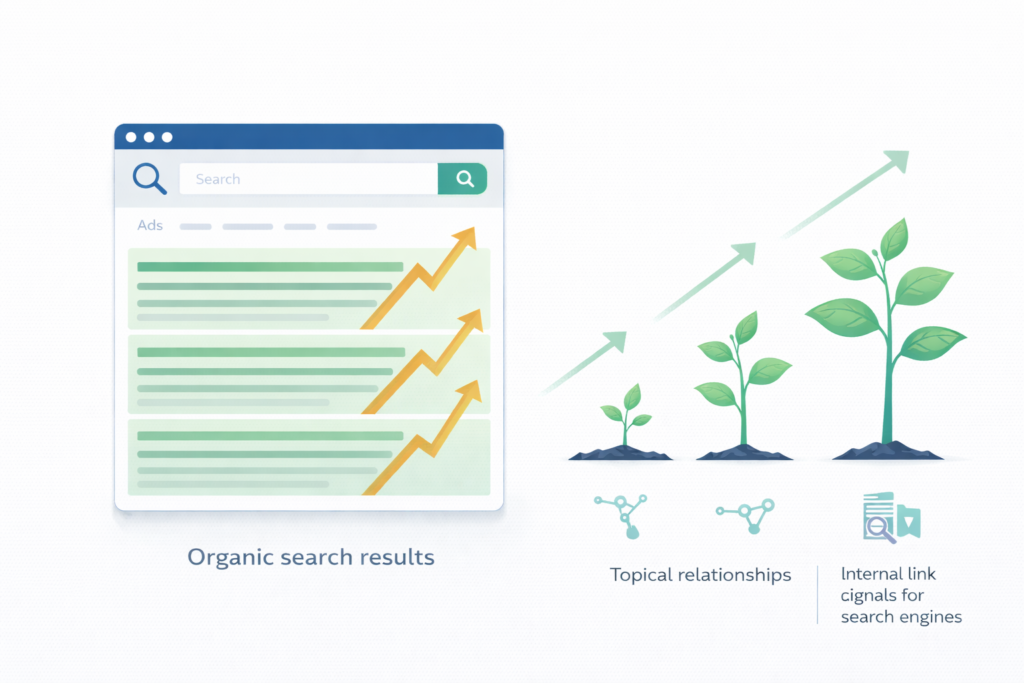
SEO (Search Engine Optimization) is the process of improving your website so it appears in organic (non-paid) search results.
SEO focuses on:
- Creating useful, relevant content
- Structuring your site properly
- Earning trust and authority over time
When SEO works, your pages rank naturally—without paying for every click.
Key characteristics of SEO
- Long-term growth
- No direct cost per click
- Traffic compounds over time
- Results take time, but last longer
Example:
A blog post that ranks on page one can bring traffic for months or even years.
What Is SEM? (Paid Search)
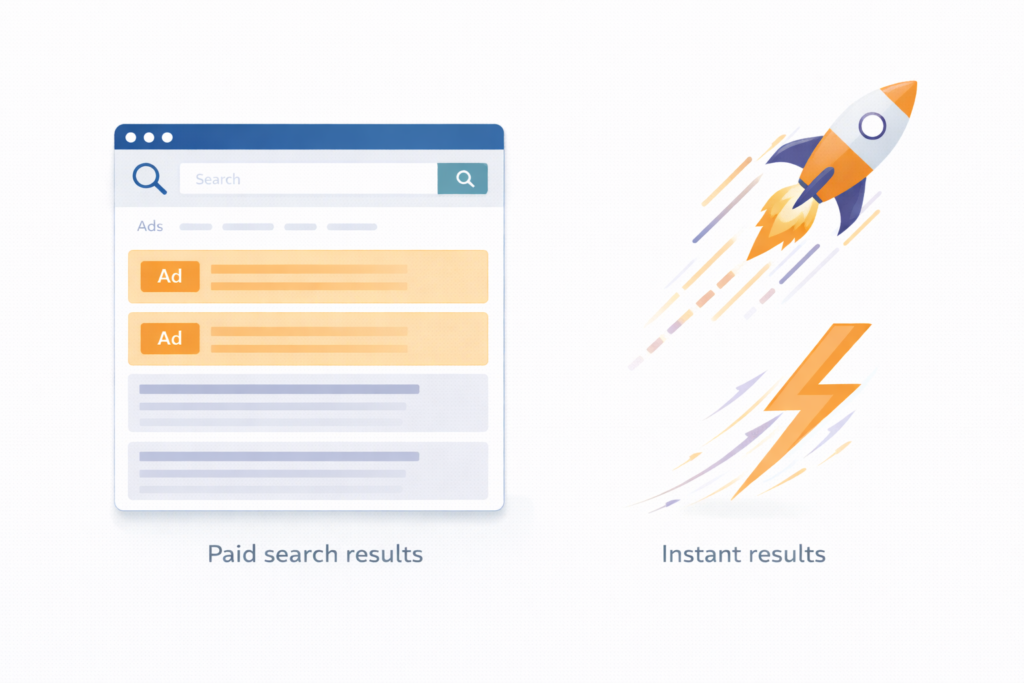
SEM (Search Engine Marketing) usually refers to paid search advertising, such as Google Ads.
With SEM, you:
- Bid on keywords
- Pay each time someone clicks your ad
- Appear instantly at the top of search results (marked as “Ad”)
Key characteristics of SEM
- Immediate visibility
- Full control over targeting
- Pay per click
- Traffic stops when ads stop
Example:
A new ecommerce store runs Google Ads and appears on page one the same day.
SEO vs. SEM: The Core Differences
| Factor | SEO (Organic) | SEM (Paid) |
|---|---|---|
| Cost model | No cost per click | Pay per click |
| Speed | Slow to build | Instant |
| Longevity | Long-term | Short-term |
| Trust | Higher (earned) | Lower (ad label) |
| Scalability | Compounds | Budget-dependent |
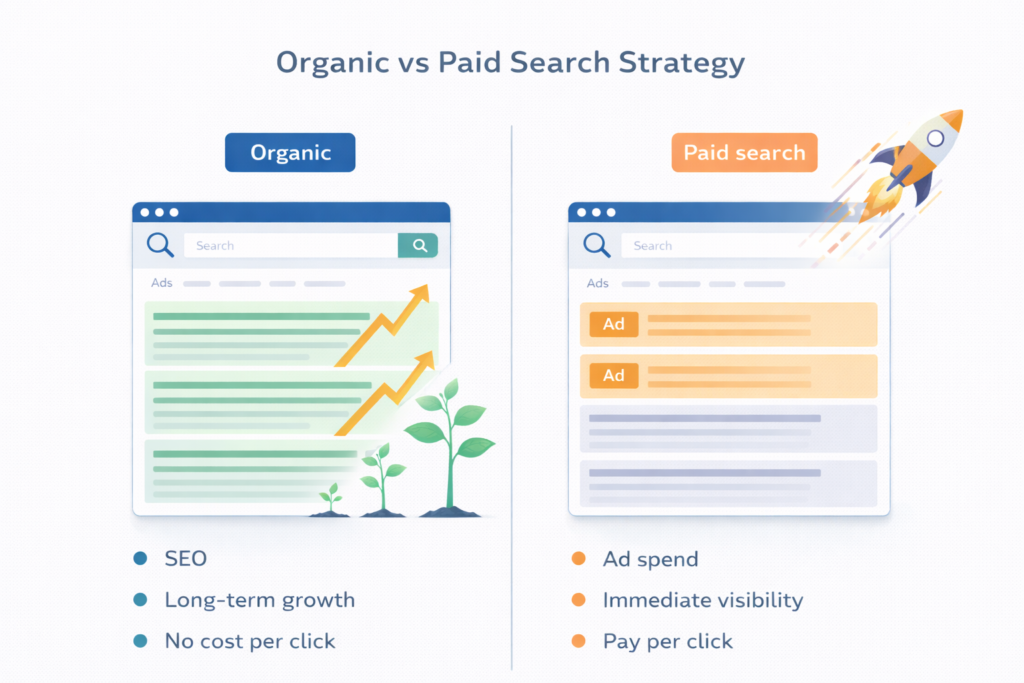
Organic vs. Paid Search Strategy (Side-by-Side View)
Organic Search (SEO)
- Builds authority and trust
- Best for sustainable growth
- Ideal for blogs, service sites, content brands
Paid Search (SEM)
- Delivers fast traffic
- Best for promotions, launches, offers
- Ideal for ecommerce and lead generation
When Should You Use SEO?
SEO is best when:
- You want long-term visibility
- You publish content regularly
- You want to build brand authority
- You don’t want to pay for every visitor
Common use cases:
- Blogs & publishers
- Service businesses
- Local businesses
- Thought leadership brands
When Should You Use SEM?
SEM is best when:
- You need traffic now
- You’re launching a new product or site
- You’re running limited-time campaigns
- You want precise targeting and testing
Common use cases:
- Ecommerce stores
- Event promotions
- Lead generation campaigns
- Seasonal offers
The Smart Approach: SEO + SEM Together
The most effective digital strategies combine both.
- Use SEM to test keywords and get immediate traffic
- Use SEO to build long-term, cost-effective growth
- Let paid data inform organic content strategy
Think of it like this:
- SEM = accelerator
- SEO = engine
Quick Decision Guide
Choose SEO if you want:
- Sustainable growth
- Lower long-term cost
- Brand authority
Choose SEM if you want:
- Fast results
- Campaign control
- Immediate leads or sales
Choose both if you want to grow smart and scalable.