
SEO isn’t just about rankings.
It’s about growth—more visibility, better traffic, stronger authority, and real business results.
To understand whether your SEO efforts are working, you need to track the right performance and growth metrics. This guide explains what to measure, why it matters, and how to interpret the data without getting overwhelmed.
What Are SEO Performance & Growth Metrics?
SEO performance metrics show how your website is performing in search today.
SEO growth metrics show whether your visibility, authority, and impact are improving over time.
Together, they answer key questions:
- Are more people finding my site?
- Am I attracting the right audience?
- Is SEO helping my business grow?
Not all metrics are equally important. Some show progress, others show impact.
Core Categories of SEO Metrics
SEO metrics can be grouped into five main categories. Tracking at least one metric from each category gives you a complete picture.
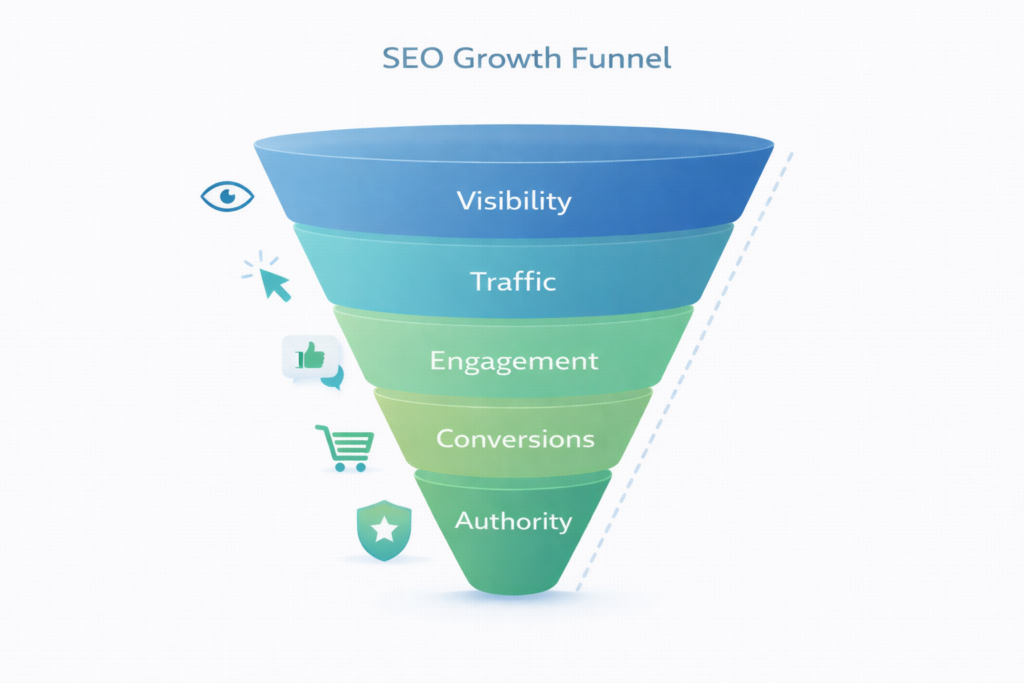
1️⃣ Visibility Metrics (Are You Being Seen?)
These metrics measure how visible your site is in search results.
Key metrics:
- Keyword rankings (especially for important pages)
- Number of ranking keywords
- Average position
- Search visibility score (overall presence across keywords)
Why they matter:
Visibility metrics show whether your content is appearing where people can actually see it.
Example (Blog):
Your article moves from page 3 to page 1. Traffic may not spike instantly, but visibility has clearly improved.
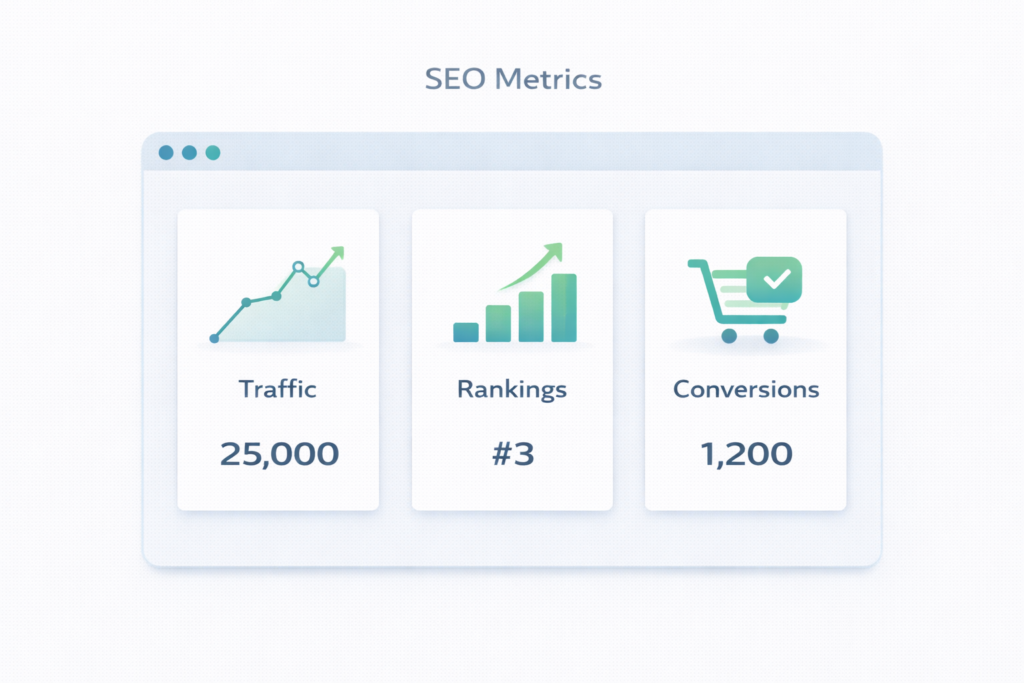
2️⃣ Traffic Metrics (Are People Clicking?)
These metrics measure how many users actually visit your site from search engines.
Key metrics:
- Organic sessions
- Organic users
- Traffic growth over time
- Click-through rate (CTR)
Why they matter:
Rankings don’t pay the bills—traffic does. These metrics show whether visibility is turning into real visits.
Example (Local business):
Your service page ranks in the top 5, but low CTR suggests your title or description needs improvement.
3️⃣ Engagement Metrics (Are Visitors Finding Value?)
Engagement metrics show how users behave after they land on your site.
Key metrics:
- Time on page
- Pages per session
- Scroll depth
- Return visitors
Why they matter:
Search engines aim to rank pages that satisfy users. Strong engagement supports relevance and trust.
Example (Ecommerce):
Users browse multiple product pages and spend time reading descriptions—this signals quality and intent.
4️⃣ Conversion Metrics (Is SEO Driving Results?)
Conversions measure business impact, not just traffic.
Common SEO conversions:
- Contact form submissions
- Phone calls
- Newsletter signups
- Purchases
- Demo requests
Why they matter:
SEO success isn’t just traffic growth—it’s outcome growth.
Example:
Traffic grows by 20%, but conversions double. That’s high-quality SEO growth.
5️⃣ Authority & Growth Metrics (Are You Building Strength?)
These metrics show whether your site’s long-term SEO strength is improving.
Key indicators:
- Growth in referring domains
- Mentions across the web
- Content coverage depth (topical authority)
- Stability of rankings over time
Why they matter:
Authority metrics explain why rankings improve and stay stable, especially in competitive niches.
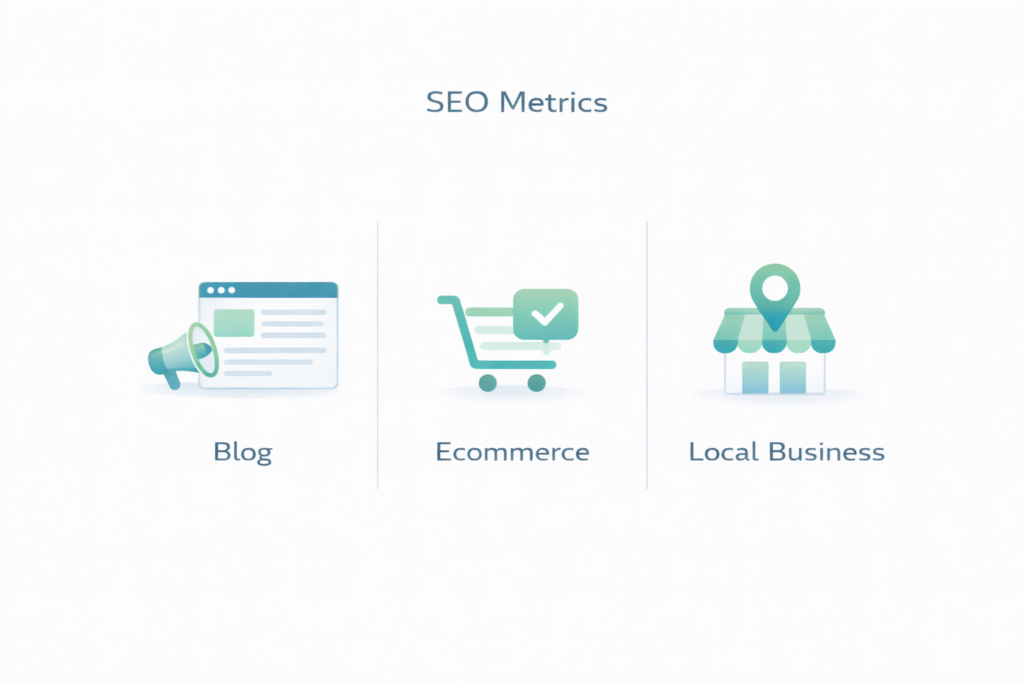
SEO Performance Metrics by Website Type
Blogs & Content Sites
Focus on:
- Organic traffic growth
- Ranking keyword count
- Engagement (time on page)
- Topical coverage expansion
Ecommerce Sites
Focus on:
- Organic revenue
- Product & category rankings
- Conversion rate from organic traffic
- Assisted conversions (SEO → purchase later)
Local Business Sites
Focus on:
- Local keyword rankings
- Calls and form leads
- Location page traffic
- Branded search growth
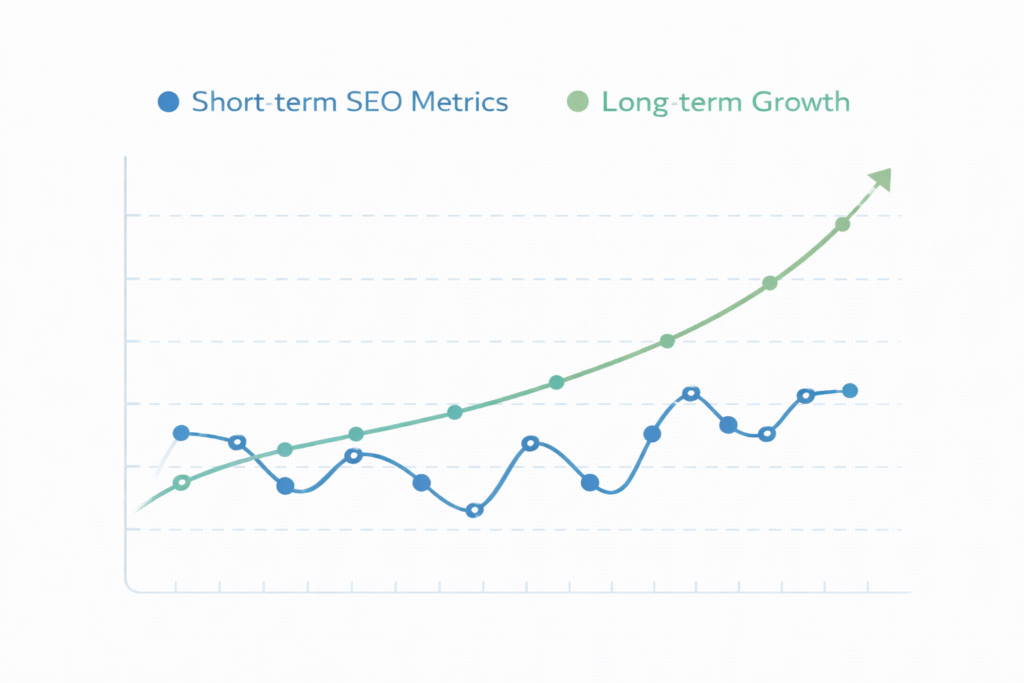
Short-Term vs Long-Term SEO Metrics
Short-term (Leading indicators)
- Indexing status
- Early ranking improvements
- Keyword coverage growth
Long-term (Lagging indicators)
- Sustained traffic growth
- Stable rankings
- Brand searches
- Revenue and leads from SEO
Important:
Early SEO success often shows up in visibility and engagement before conversions increase.
Common SEO Metric Mistakes to Avoid
❌ Tracking rankings only
❌ Ignoring conversion data
❌ Obsessing over vanity metrics
❌ Measuring SEO week-to-week instead of month-to-month
❌ Comparing SEO to paid ads on short timelines
SEO growth is compounding, not instant.
How to Read SEO Growth the Right Way
Instead of asking:
“Did traffic go up this week?”
Ask:
- Is organic traffic trending upward over 3–6 months?
- Are more pages ranking?
- Is organic traffic converting better?
- Is authority becoming more stable?
This mindset leads to smarter decisions.
Simple SEO Performance Review Framework
Use this monthly check:
- Visibility: Are more keywords ranking?
- Traffic: Is organic traffic trending up?
- Engagement: Are users staying longer?
- Conversions: Is SEO driving leads or sales?
- Authority: Is trust building over time?
If 3 out of 5 improve consistently, SEO is working.
Practical SEO Performance & Growth Checklist
Use this checklist to evaluate your SEO health:
- Organic traffic trending up month over month
- Important pages improving in rankings
- Click-through rate optimized for key pages
- Engagement metrics stable or improving
- Clear conversion tracking in place
- Content depth expanding in core topics
- Authority signals growing gradually