
Search engines don’t rank websites randomly.
Every position you see in search results is based on ranking signals and authority factors—clues that tell search engines which pages deserve visibility.
Understanding these signals helps you stop guessing and start building real, sustainable authority.
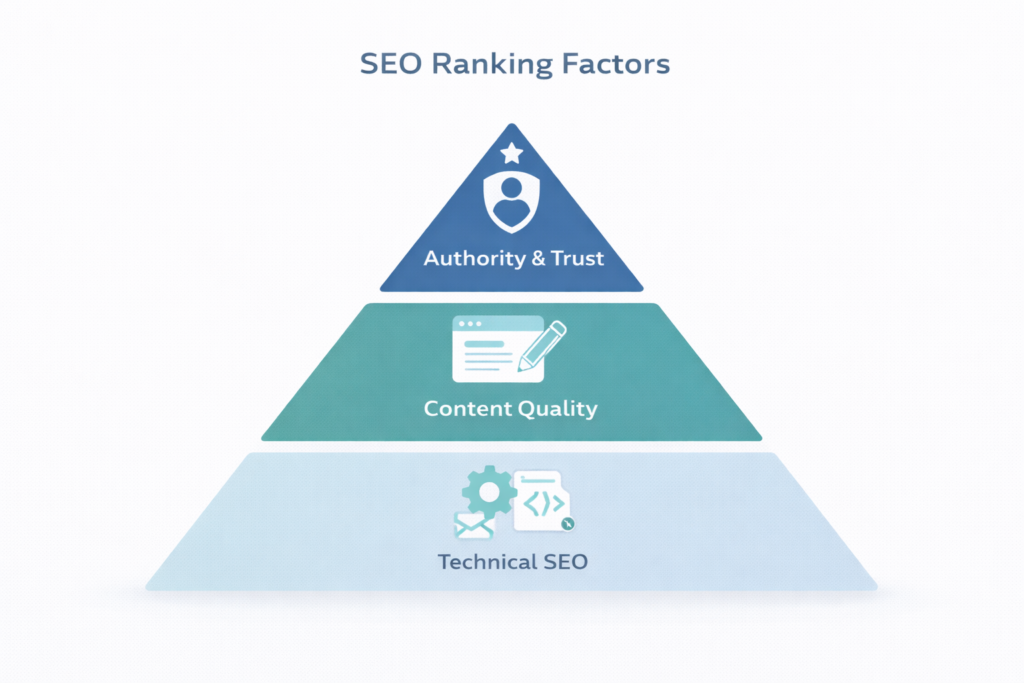
What Are Ranking Signals?
Ranking signals are factors search engines use to evaluate and order webpages in search results.
They answer questions like:
- Is this page relevant?
- Is it trustworthy?
- Is it useful for users?
- Does this site have authority in this topic?
Search engines (like Google) use hundreds of signals, but most of them fall into a few clear categories.
What Are Authority Factors?
Authority factors measure how much a website (or page) is trusted compared to others.
Authority is not a single metric—it’s built through:
- Content quality
- Links and references
- Brand signals
- User trust and engagement
- Consistency over time
Think of authority as reputation in the digital world.
Core Categories of Ranking Signals
1️⃣ Content Relevance & Quality
Search engines aim to show the best possible answer to a user’s query.
Key factors include:
- Clear topic focus
- Depth and completeness
- Original insights (not copied or thin content)
- Logical structure (headings, sections)
Example (Blog):
A detailed guide answering one main question clearly will usually outperform multiple shallow posts.
2️⃣ On-Page SEO Signals
These signals help search engines understand what your page is about.
Important on-page elements:
- Page title & meta description
- Headings (H1, H2, H3)
- Internal links
- Image alt text
- Clean URLs
Example (Local business):
A service page with a clear title, structured sections, and internal links ranks better than a vague “services” page.
3️⃣ Backlinks & External Authority
Backlinks act like votes of confidence.
But not all links are equal.
Search engines evaluate:
- Link relevance (same or related industry)
- Link quality (trusted sites)
- Natural link patterns
- Editorial context (links inside content > footer links)
Example (Ecommerce):
One mention from a respected industry blog can be more powerful than dozens of low-quality links.
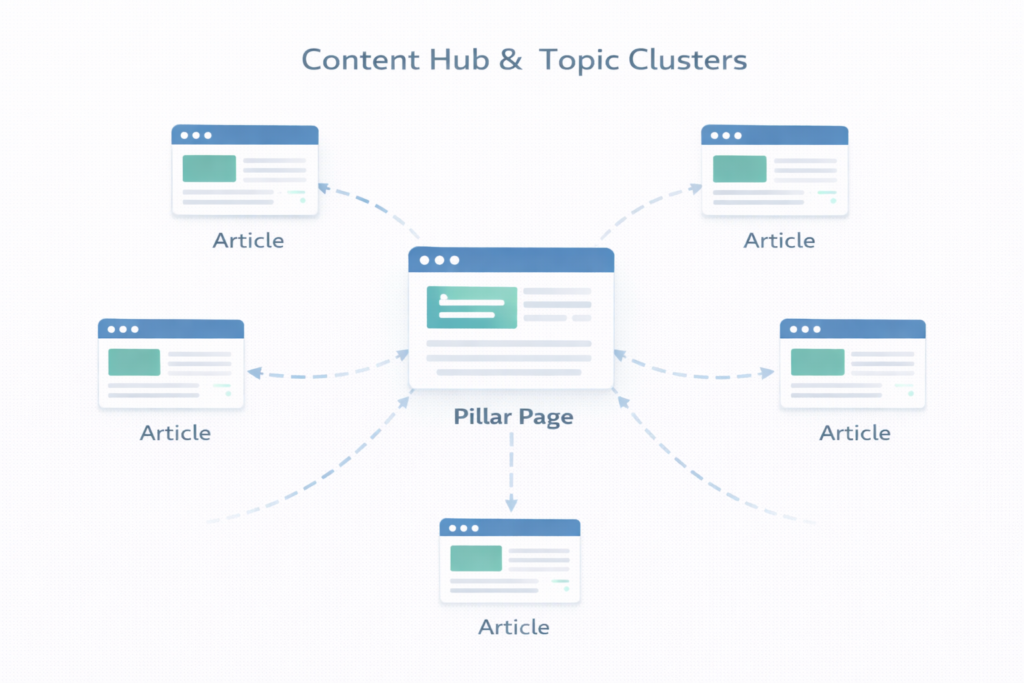
4️⃣ Topical Authority (Subject Expertise)
Topical authority means covering a subject thoroughly, not just one keyword.
Search engines trust sites that:
- Publish multiple related articles
- Interlink them logically
- Show consistent expertise
Example (SEO blog):
A site with guides on technical SEO, content SEO, and local SEO builds more authority than a single SEO article.
5️⃣ User Experience & Engagement Signals
Search engines observe how users interact with your site.
Signals include:
- Time spent on page
- Navigation behavior
- Return visits
- Mobile friendliness
While not all engagement metrics are direct ranking factors, they strongly support trust and relevance.
Example:
If users quickly leave a page, it signals poor satisfaction.
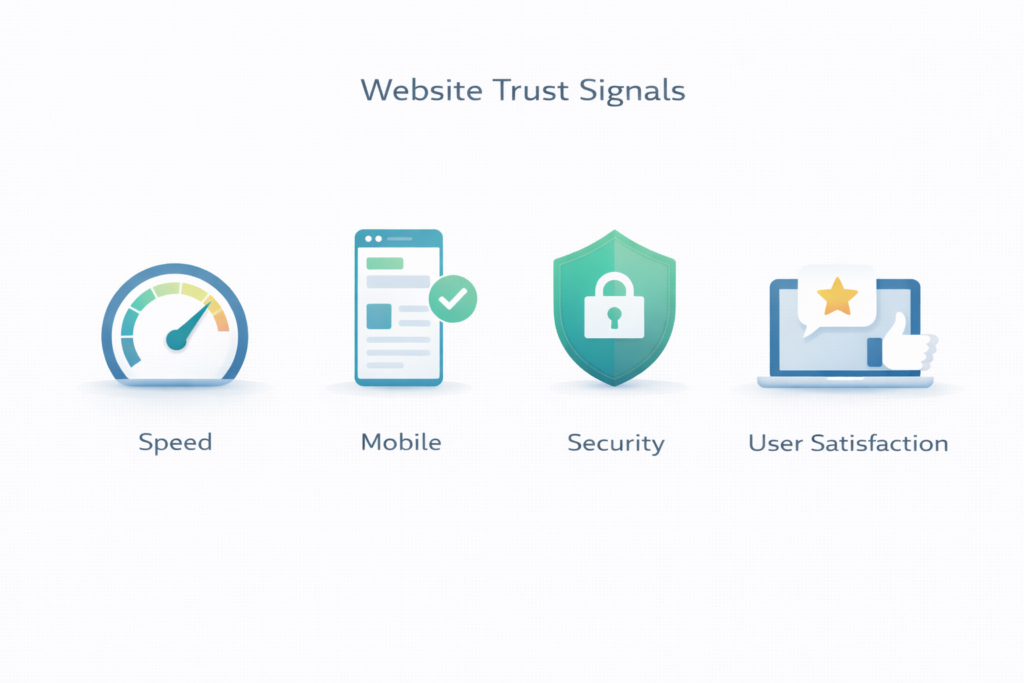
6️⃣ Technical Trust & Site Health
Even great content can struggle if technical foundations are weak.
Key technical authority factors:
- Fast page speed
- Mobile-friendly design
- Secure HTTPS
- Clean crawlability (no broken links)
- Logical site architecture
Example:
A fast, mobile-optimized site often outranks a slow, cluttered competitor—even with similar content.
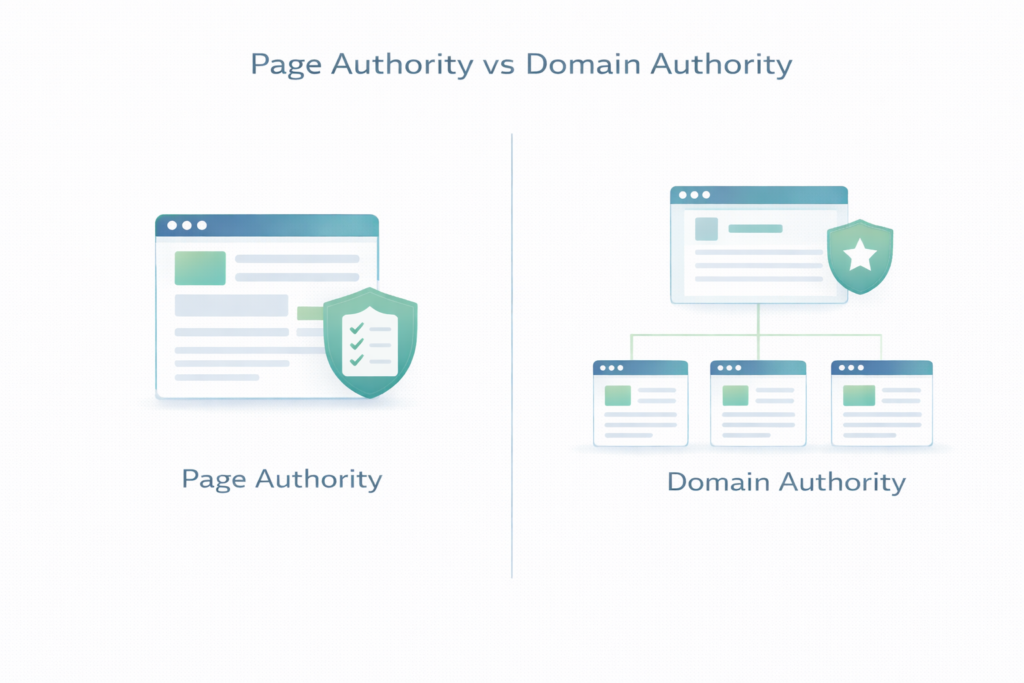
Page Authority vs Domain Authority
Page Authority
How strong one specific page is.
Influenced by:
- Content quality
- Internal links
- External links pointing to that page
Domain Authority (Conceptual)
Overall trust of the entire website.
Influenced by:
- Brand consistency
- Depth of content
- Overall backlink profile
- Historical performance
Strong domains make it easier for new pages to rank.
Brand Signals & Real-World Authority
Modern search engines look beyond links.
Brand authority includes:
- Brand mentions (even without links)
- Searches for your brand name
- Consistent presence across platforms
- Clear authorship and credibility
Example:
Known brands often rank faster because search engines recognize user trust signals.
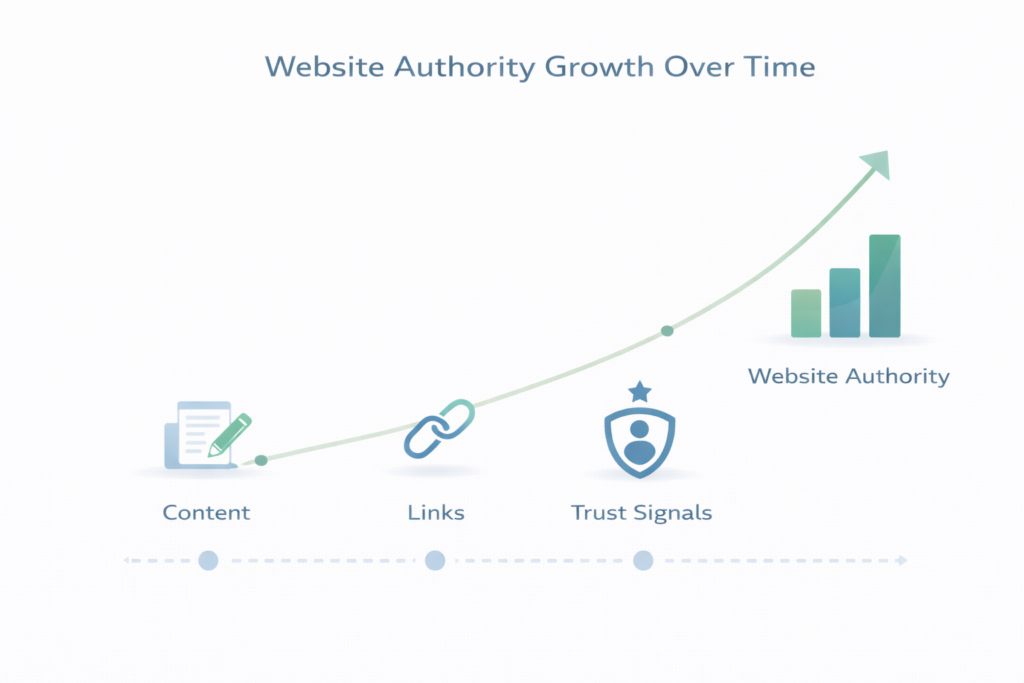
How Authority Builds Over Time
Authority is earned, not activated.
Typical progression:
- Publish helpful content
- Get indexed and discovered
- Earn links and mentions
- Build topical depth
- Gain user trust
- Rankings become more stable
This is why shortcuts rarely work long term.
Ranking Signals by Website Type
Blogs & Content Sites
- Content depth
- Internal linking
- Topical authority
- Backlinks from related blogs
Ecommerce Stores
- Product page quality
- Category structure
- Reviews and trust signals
- Technical performance
Local Business Websites
- Location relevance
- Service page clarity
- Reviews and citations
- Brand trust
Common Myths About Ranking Signals
❌ “More keywords = higher rankings”
❌ “More backlinks always win”
❌ “New sites can’t rank”
❌ “One SEO trick will fix everything”
✅ Authority comes from consistency + quality + trust.
Practical Checklist: Ranking Signals & Authority
Use this checklist to evaluate your site:
- Clear topic focus on every page
- Helpful, original content
- Logical internal linking
- Strong technical foundation
- Natural, relevant backlinks
- Consistent publishing in core topics
- Clear brand and trust signals