
Spotify Wants to Be the Music Service AI Agents Choose
Spotify reported 788 million monthly active users and is betting that AI agents will send it more listeners, not fewer. For marketers and ecommerce owners, the real lesson is how to become the brand an agent picks.
Rajesh Kumar · 22 Oct 2026 · 3 min read

- Spotify reported 788 million monthly active users and nearly €5 billion in quarterly revenue.
- Spotify is integrating with agents including Meta's Muse, ChatGPT and Claude, framing AI as a tailwind.
- Spotify says it does not send listener data to partners; it reasons about requests with its own systems.
- Amazon blocking Meta's Muse from shopping shows access to third-party agents is contested.
- Businesses should prepare by structuring data, protecting first-party data and deciding their agent access stance.
What happened
Spotify's third quarter was strong. It reached 788 million monthly active users and generated nearly €5 billion (around $5.6 billion USD) in revenue. But the more useful signal for marketers came from the earnings call, as reported by TechCrunch AI.
Co-CEO Gustav Söderström argued that Spotify is in one of the few categories that stands to thrive in the agentic age. His reasoning: agents are good at taking over chores people want to skip, but entertainment is not a chore. In his words, nobody asks an agent to "summarize a song."
So Spotify is leaning in. It wants to be the media service people use from any agent. It was the first music service to integrate with Meta's Muse assistant, and it also integrates with ChatGPT and Claude. Söderström said adoption inside these agents is good, and that other companies are "leaning out" while Spotify participates in the growth.
The part that matters: the agent asks, Spotify decides
Spotify says it is not sending listener data to partners. The agent makes a request, and Spotify uses its own systems to reason about it and choose what to play.
That matters because Spotify keeps its main asset, years of listening history, including what people return to, skip and discover. The agent becomes a new front door, but the intelligence stays inside Spotify.
Söderström's example was a request to go through your history back to 2008, pick your true favorites, adjust their tempo, sort them by key and BPM, and mix them into a running playlist at your exact cadence. That is a personalized task a generic assistant can't do well without the data behind it.
Why it matters for visibility
This is a preview of how discovery may work for many businesses. Instead of a user opening your app or searching your site, they ask an assistant, and the assistant chooses which service to call.
That creates two competing pressures:
- Be connectable. Spotify gains reach by being available inside ChatGPT, Claude and Meta's Muse.
- Keep control. Spotify holds on to its data and decision logic instead of handing them over.
There is also friction. The source notes that Amazon has blocked Meta's Muse from shopping on its platform. Access, security, privacy and commercial control are all live questions, and large platforms will not all open their doors.
What this means for ecommerce and marketers
Most businesses are not Spotify, and the source doesn't suggest agent-driven traffic is replacing anything yet. But the direction is clear enough to plan for.
An agent recommending a product, service or piece of content will favor sources that are easy to understand, easy to connect to and clearly relevant to the request. Being the brand an agent picks will increasingly depend on both your data and how accessible you are.
Practical actions
1. Make your catalog machine-readable. Clean product data, clear descriptions, accurate pricing and availability, and structured markup make it easier for any system, human or AI, to understand what you sell.
2. Decide your stance on agent access. Spotify chose to integrate. Amazon chose to restrict one agent. Neither is automatically right. Decide based on your margins, customer data risk and brand control.
3. Protect your first-party data. Spotify's advantage is that its recommendations rely on data others don't have. Invest in reviews, purchase history, preferences and loyalty data you own.
4. Write for requests, not just keywords. People talk to assistants in full requests, such as music for a run. Build content and product pages that answer specific situations and use cases.
5. Watch where your category sits. Chore-like purchases, such as reordering, comparing or booking, are more likely to be handed to agents. Experience-led categories may see agents as a discovery channel instead. Plan differently for each.
6. Track assistant referrals. Check analytics for traffic from AI tools and ask customers how they found you. You can't optimize what you don't measure.
Bottom line
Spotify's message is not that AI will replace search. It is that agents will become another way to reach the product, and the winners will be services useful enough to be chosen. Start by making your business easy to find, easy to connect with and hard to replace.
Raj's takeSpotify is making a smart distinction: be available everywhere agents live, but keep the data and decision-making at home. Most ecommerce owners should think the same way, because being chosen by an agent will come down to clean data, clear relevance and a first-party advantage that a generic assistant can't copy.
Want this applied to your business?
Related
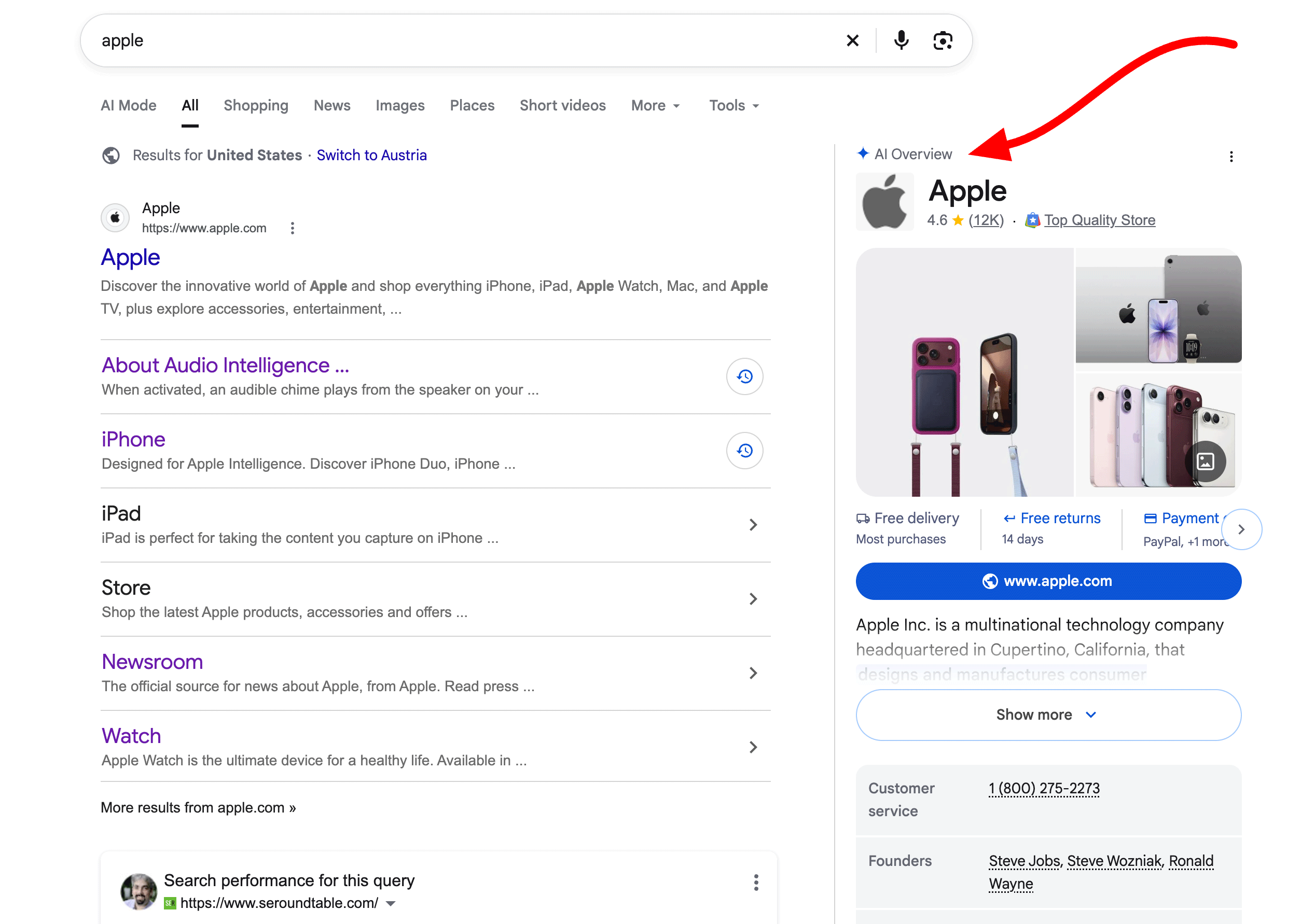
Google Moves Brand AI Overviews to the Right Column
Google is showing AI Overviews for many brand searches in the right-hand column, where Knowledge Panels used to sit. Brands now have less control over a prominent summary of who they are.

Google's Privacy Update Opens Gmail and Photos to Ad Targeting
Google has changed its privacy policy so that data from Gmail, Drive and Photos can inform personalized ads if you connect them to AI features like Personal Intelligence. Here is what marketers and business owners should understand and do.
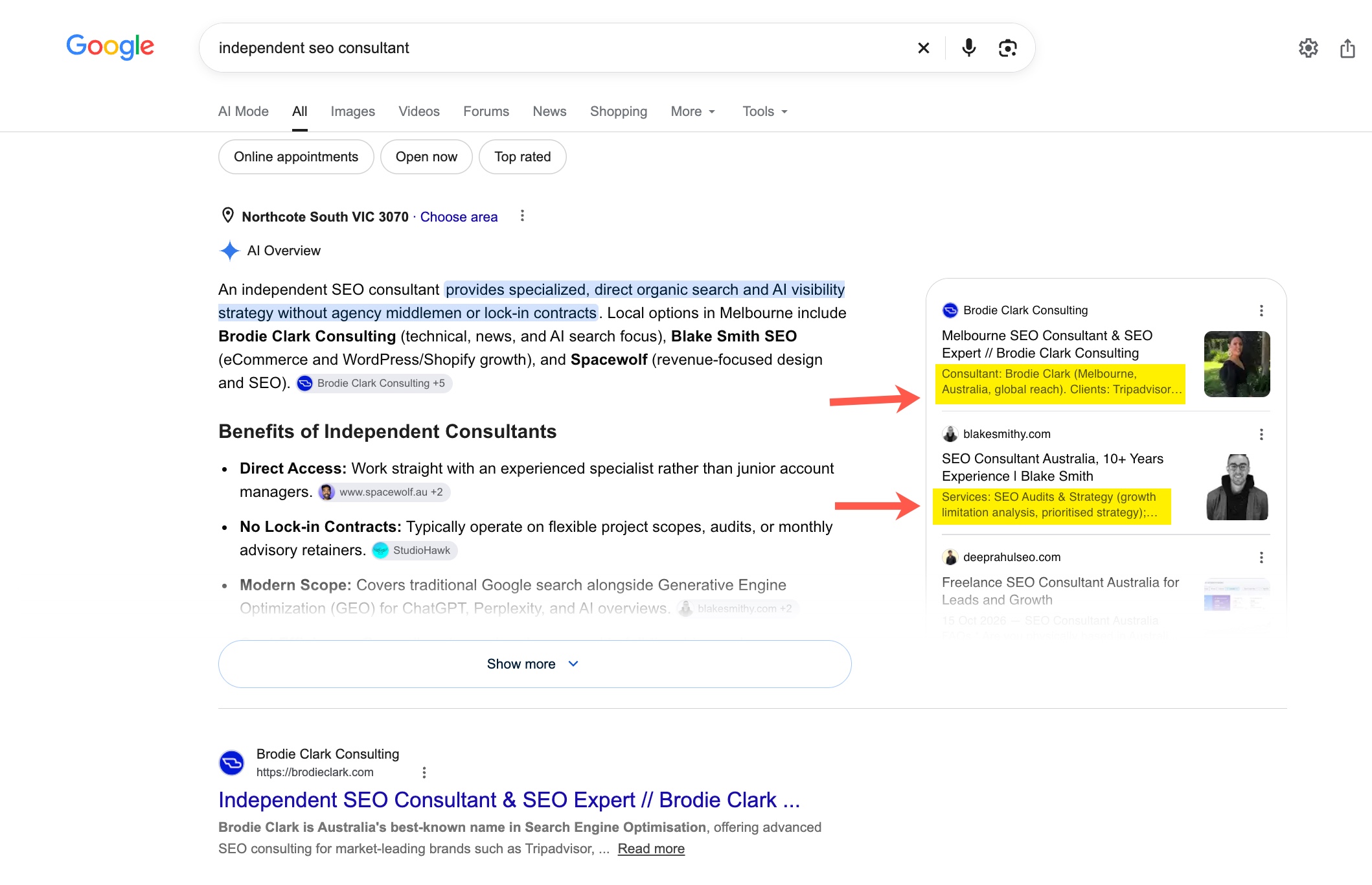
Google AI Overviews Now Summarise Your Page in Citation Cards
Google appears to be testing AI-generated summary snippets inside the citation cards of AI Overviews. The text shown may not match your page, which changes how your content is represented in search.