
Google, Not ChatGPT, Still Drives Your Revenue
Marie Haynes analysed 100 sites and found ChatGPT sends under 1% of the traffic Google organic does. Her advice: stop chasing LLM citations and prepare for Google's agentic commerce layer.
Rajesh Kumar · 26 Oct 2026 · 3 min read

- Across 100 sites and 145M+ sessions, ChatGPT sent 0.62% of the traffic Google organic did (0.73% with all LLMs).
- ChatGPT visitors converted at 13.8% versus 3.02% for Google organic, yet Google drove 96.5% of conversions.
- 45 of the 100 sampled sites tracked no key events, so many cannot measure any channel properly.
- Google's agentic commerce tools, including Universal Cart, UCP and Merchant Center, are where Haynes sees the next opportunity.
- Experiment with WebMCP, but don't overinvest yet; the technology is still developing.
What happened
Marie Haynes, writing in Search Engine Journal, has challenged the current obsession with GEO (generative engine optimization). She pulled 12 months of GA4 data from 100 websites, covering more than 145 million sessions, and compared LLM referrals against Google organic.
The numbers are lopsided. Sessions from ChatGPT equalled just 0.62% of Google organic volume. Add every other LLM and it rises to 0.73%.
The conversion twist
Among the 55 sites tracking conversions, ChatGPT visitors did convert better: 13.8% against 3.02% for Google organic. That is more than 4.5x higher.
But volume wins. Google still drove 96.5% of all conversions, roughly 27x more than all LLMs combined in this sample.
Haynes also reports that ChatGPT's referral growth stopped around August 2025, when GPT-5 launched, and that visits to these sites have declined since. It is a small dataset, so treat it as a strong signal rather than a universal law.
Why this matters
Many businesses are paying for tools that track brand mentions in ChatGPT and similar systems. If the traffic is that small, those budgets deserve scrutiny.
The bigger point is that AI search is already happening, just inside Google. AI Overviews, AI Mode and a ranking system heavily influenced by deep learning mean millions of people use AI search daily without leaving Google. Clicks to informational content may be shrinking, but for businesses, Google is still the most likely discovery route.
There is also a basic hygiene problem. Of the 100 randomly sampled sites, 45 tracked no key events at all. You cannot judge any channel, AI or not, if you do not know what a conversion looks like.
The agentic web is the real opportunity
Haynes points to Sundar Pichai's comment that Search will become an "agent manager", moving from a list of links to a work coordinator. She highlights several developments:
- Universal Cart: combines products from multiple retailers into one checkout in Google Wallet, tracking price changes, promotions and restocks. Her advice is to master Merchant Center data.
- UCP: an open discovery layer, governed by Google, Shopify and Stripe, where agents compare inventory and buy while the merchant stays merchant of record. She expects technical SEO to expand to include endpoints such as /.well-known/ucp.
- WebMCP: lets sites expose forms, calculators and booking tools to AI agents. She thinks it is early for most businesses, but not too early to experiment.
- Intelligent eyewear: Gemini-powered glasses on Android XR, which she believes will expand search rather than replace it.
She admits nobody can predict how this unfolds, and that reporting will be hard when no two Google searches return the same results.
What to do now
1. Fix your measurement. Define conversions or key events in GA4 and track them. Do this before spending on any AI visibility tool.
2. Check your LLM share. Look at your own referral data. If ChatGPT is a rounding error for you, budget accordingly.
3. Treat Merchant Center as core infrastructure. If you sell products, clean feeds, accurate prices and stock, and good product data are your entry ticket to agentic shopping.
4. Study how Google represents your brand. Search your key terms in AI Overviews and AI Mode and see where you appear and where competitors do.
5. Run small experiments. Ask what tools you could expose to agents via WebMCP, such as quote calculators or booking forms, without betting big.
6. Win on fundamentals. Haynes stresses that much of agentic discovery will come down to having the best products, prices and customer service.
The caveat
This is one analyst's dataset of 100 sites, and your industry may differ. A B2B software firm with a technical audience may see far more ChatGPT traffic than a local retailer. Check your own numbers first.
Raj's takeI agree with the direction: too many businesses are paying to track ChatGPT mentions while their Google conversions go unmeasured. Check your own GA4 data before copying anyone's conclusions, including this one. For ecommerce owners, getting Merchant Center and product data right is the most practical step today.
Want this applied to your business?
Related
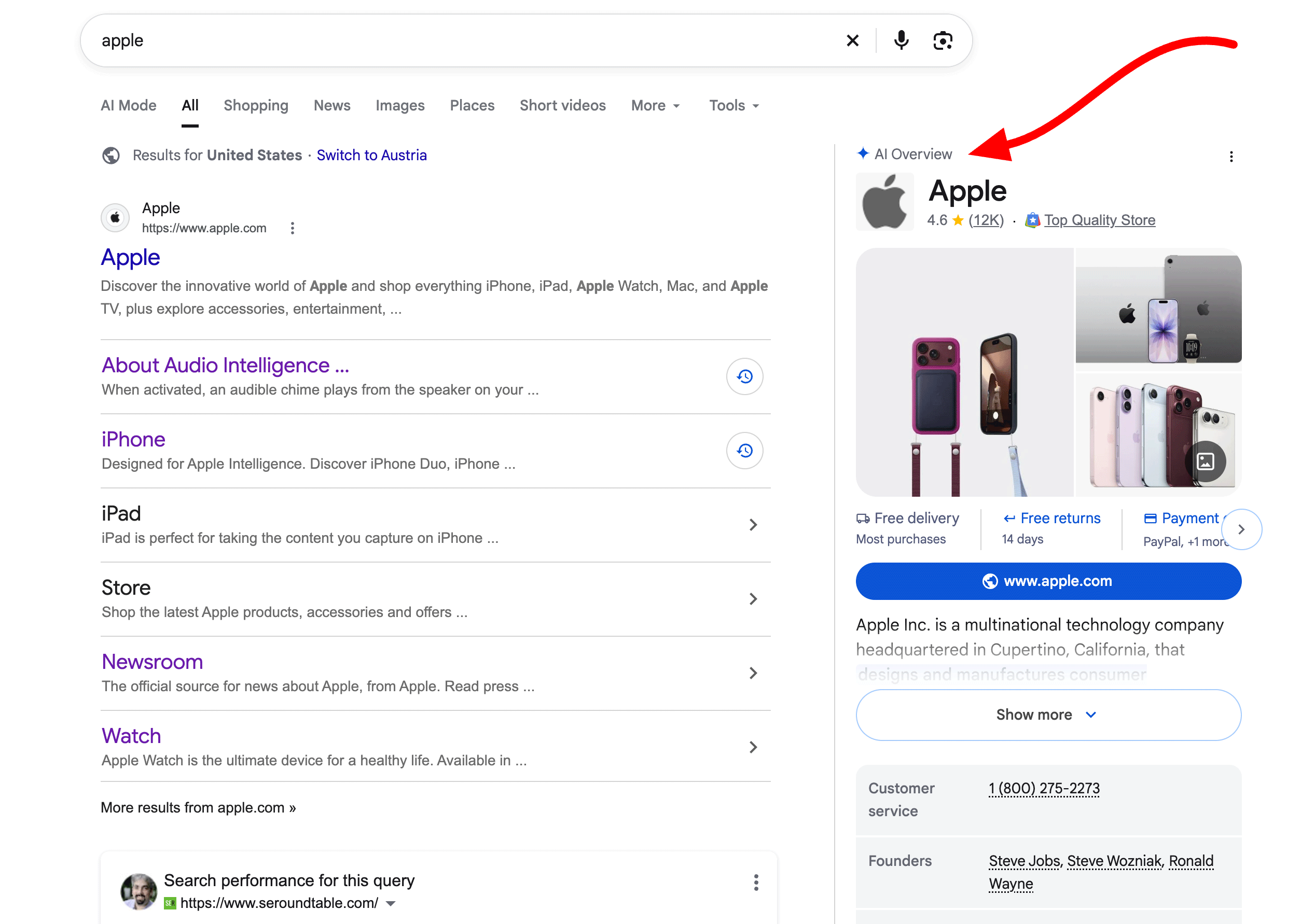
Google Moves Brand AI Overviews to the Right Column
Google is showing AI Overviews for many brand searches in the right-hand column, where Knowledge Panels used to sit. Brands now have less control over a prominent summary of who they are.

Google's Privacy Update Opens Gmail and Photos to Ad Targeting
Google has changed its privacy policy so that data from Gmail, Drive and Photos can inform personalized ads if you connect them to AI features like Personal Intelligence. Here is what marketers and business owners should understand and do.
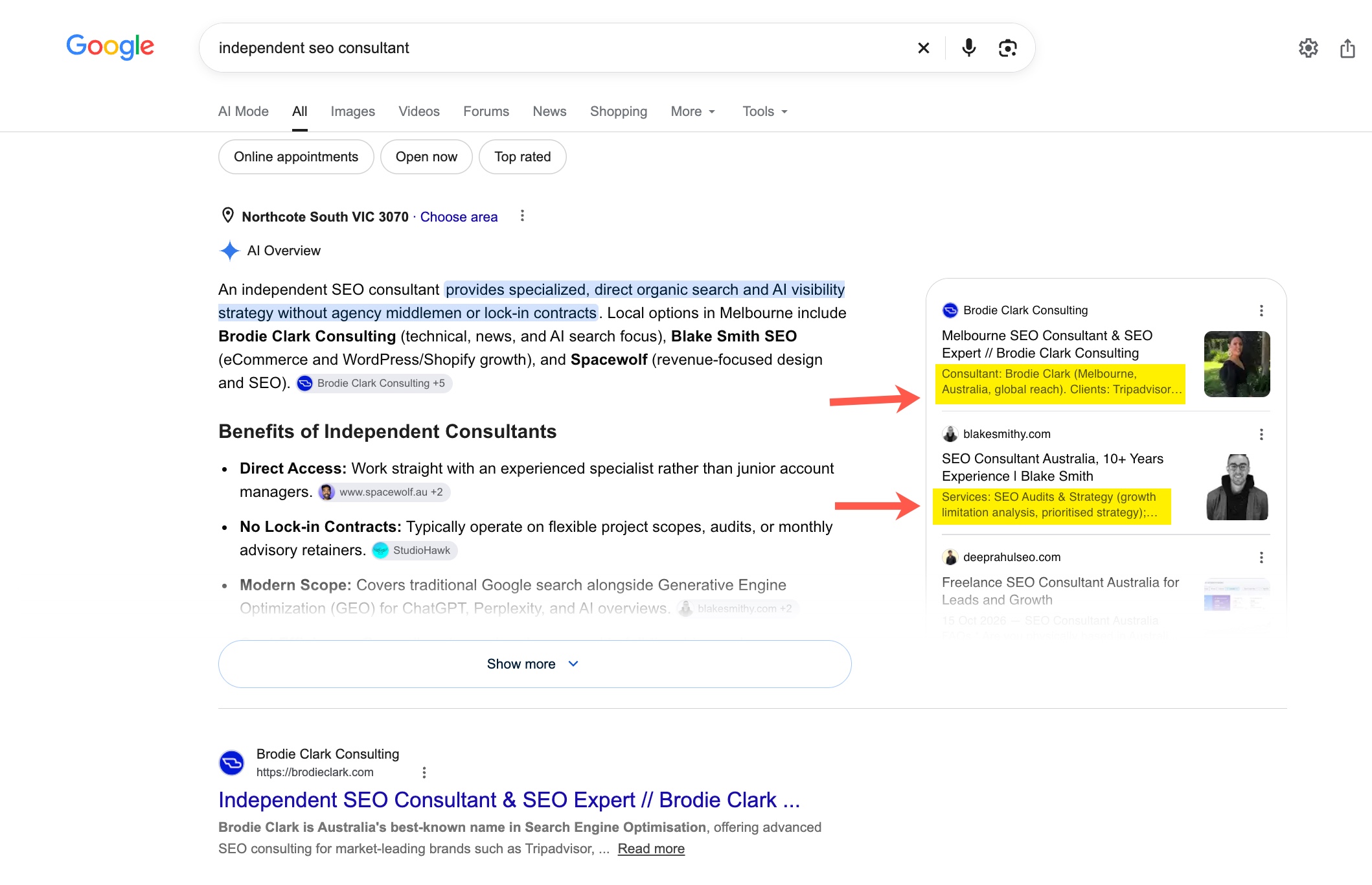
Google AI Overviews Now Summarise Your Page in Citation Cards
Google appears to be testing AI-generated summary snippets inside the citation cards of AI Overviews. The text shown may not match your page, which changes how your content is represented in search.