
GEO Isn't a Distraction: Referral Data Misses AI's Influence
Referral data shows AI sends under 1% of Google's traffic, and some say GEO is a wasted investment. A Search Engine Journal analysis argues the click-based view misses where AI shapes buying decisions.
Rajesh Kumar · 6 Nov 2026 · 3 min read

- Two studies (145M and 108M sessions) found AI referrals at under 1% of Google search traffic, about 0.66% in the second.
- ChatGPT visitors converted at nearly 14% versus about 3% for standard search visitors.
- Analytics records nothing when AI answers a question without a click, so influence goes uncounted.
- Buyers may research in AI, then search the brand on Google, which then gets the credit.
- Treat GEO as a complement to SEO and measure quality and attribution, not just volume.
What happened
A debate is running in SEO circles over whether optimizing for AI answer engines (GEO) is worth the effort. Marie Haynes looked at 145 million sessions across more than 100 websites and found that ChatGPT visits were under one percent of the volume Google search delivered. Her conclusion was that GEO is a misplaced investment.
A follow-up piece in Search Engine Journal by Taylor Dan RW checked this against 108 million sessions from 57+ websites, covering Jan. 1 to Nov. 2, 2026. The result was similar. Total trackable AI traffic came to 0.66% of the total, or roughly seven AI visitors for every 1,000 from search engines. Some sites saw 20-25 per 1,000, but that is still small.
Both sets of numbers also show something awkward for the "ignore it" camp. ChatGPT visitors converted at almost 14%, against about 3% for standard search visitors.
Why the traffic numbers mislead
The counts are probably accurate. The problem is what they are being asked to prove.
Analytics only records a session when someone lands on your site. If an AI engine answers the question inside the chat, your dashboard records nothing. Yet that answer may be where the buyer formed their opinion.
The article gives a simple example. A buyer spends half an hour in a chat comparing vendors on security, pricing and trade-offs. Days later they search your brand name on Google and book a demo. Analytics credits organic search. The decision, though, was shaped in the conversation.
That is the blind spot. Referral data measures clicks, not influence. Judging AI by clicks is like judging a brand sponsorship by how many people clicked on a road sign.
The conversion gap deserves attention
A 14% versus 3% conversion rate is hard to wave away. Small volume with high intent can be worth more than large volume with casual browsing, especially for B2B firms, consultants and specialist retailers.
The article's reading is that people who click out of an AI answer have already done their research. They click to confirm details or complete a purchase decision. That fits the numbers, though the source offers it as interpretation rather than proof.
The sensible response to a 5x conversion advantage is to find out why it happens and make sure you appear when serious buyers ask for recommendations.
What this means for visibility
Google still delivers the vast majority of sessions and sales. Nobody serious is saying to abandon SEO. The point is that AI visibility affects what people search for afterwards, including branded searches that get credited to Google.
If an AI engine ignores or misrepresents your company during that private research phase, the branded search and the sale may never happen. According to the source, GEO focuses on clear entity relationships and structured knowledge, and on brand placement in the sources these engines trust.
Practical actions
- Stop judging AI by referral volume alone. Track conversion rate, lead quality and revenue per AI visitor next to session counts.
- Check what AI says about you. Ask ChatGPT, Gemini and Perplexity buying-stage questions in your category. Note whether you appear and whether the description is accurate.
- Watch branded search. A rise in brand searches and demo requests without matching referral growth may point to influence happening off-dashboard. Treat it as a hypothesis to test, not a conclusion.
- Ask customers how they found you. Add a "how did you hear about us" field to forms and checkout. Self-reported attribution catches what analytics can't.
- Make your facts clear. Pricing, specs, comparisons, policies and entity details should be easy for machines and people to read and consistent across the web.
- Keep the investment proportionate. Don't pull budget from core SEO. Treat GEO as an extension of good content and brand work, not a replacement.
The bottom line
The traffic data says AI is small as a click source. It does not say AI is small as a decision-maker. Those are different questions, and most dashboards only answer the first one.
Raj's takeI've watched marketers dismiss new channels because they couldn't see them in analytics, and it usually costs them later. AI won't replace Google for most businesses this year, but a 14% conversion rate says these buyers are worth pursuing. Audit how AI describes your brand, fix the gaps, and add self-reported attribution so you can see what dashboards hide.
Want this applied to your business?
Related
Google Queries Hit a 5-Year High, But Search Revenue Slowed
Alphabet reported its fastest query growth in five years while search revenue growth slowed to 12%. Google itself named AI Mode's lower monetization as a cause, and that matters for anyone depending on Google traffic.
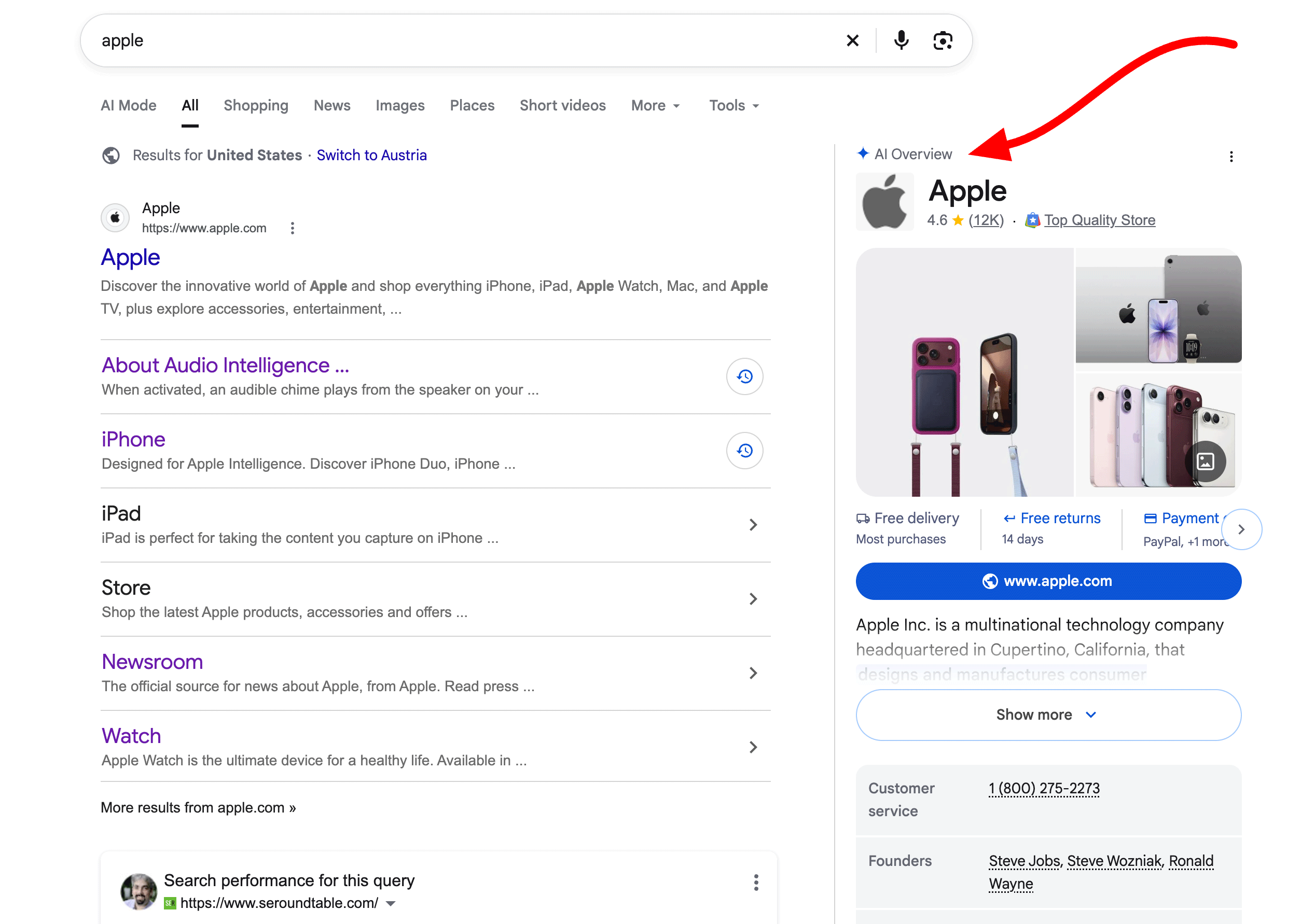
Google Moves Brand AI Overviews to the Right Column
Google is showing AI Overviews for many brand searches in the right-hand column, where Knowledge Panels used to sit. Brands now have less control over a prominent summary of who they are.

Google's Privacy Update Opens Gmail and Photos to Ad Targeting
Google has changed its privacy policy so that data from Gmail, Drive and Photos can inform personalized ads if you connect them to AI features like Personal Intelligence. Here is what marketers and business owners should understand and do.