
Google Queries Hit a 5-Year High, But Search Revenue Slowed
Alphabet reported its fastest query growth in five years while search revenue growth slowed to 12%. Google itself named AI Mode's lower monetization as a cause, and that matters for anyone depending on Google traffic.
Rajesh Kumar · 6 Nov 2026 · 3 min read

- Search & other revenue grew 12% to $63.35B, the slowest of the year, while Google reported its fastest query growth in five years.
- Google named lower monetization in AI Mode as one cause; the other drivers it cited look temporary.
- Query growth is a counted number with an undisclosed definition, so treat it cautiously.
- Google plans more ads in AI Overviews and AI Mode, including international rollout and multi-turn ads.
- Google says sponsored and organic product listings get similar click-through rates in AI Mode.
What happened
Alphabet's latest quarter produced an awkward pair of numbers. Google's CEO said year-over-year query growth is the highest in five years. Yet Search & other revenue grew only 12% to $63.35 billion, down from 19% in Q1 and 17% in Q2. That was roughly $1.6 billion below analyst expectations, and the second straight quarter search missed estimates, according to a deep-dive from Duane Forrester in Search Engine Journal.
Alphabet shares fell about 13% in one day. Search was not the only reason: free cash flow was negative $9.07 billion and capital spending keeps climbing. But one explanation stands out. Google's chief business officer said strong AI Mode growth had an impact because of the lower monetization Google sees there.
Why it matters: one cause is structural
Google gave four reasons for the slowdown: foreign exchange, Asia-Pacific retail advertisers pulling back after the EU ended its de minimis exemption, media spending normalizing after a World Cup-inflated Q2, and AI Mode. The CFO also noted Google is lapping a strong stretch of search growth.
Most of those fade. Currency moves, big sporting events end, trade rules get absorbed into budgets, and tough comparisons ease. AI Mode is different because Google is actively growing it, so the monetization gap widens as adoption rises.
The source also pushes back on the FX story. Company-wide, currency looks like a swing of a point or two at most, while search growth fell five points. FX may well be the largest single factor, but it likely does not explain most of the drop. That is the author's estimate, since Google does not publish constant-currency search figures.
Treat the query record loosely
Google did not disclose the actual query growth rate or how queries are counted inside AI Mode. AI Mode queries average three times the length of traditional searches, and multi-turn conversations are now running. If each turn counts, query growth could rise without more people searching. That is speculation, not a claim about Google's method, but it is a reason to hold the number loosely. Revenue is harder to redefine.
Ads are moving into the answer
Google is not slowing AI Mode down. Instead, it plans to close the yield gap with more advertising inside answers: scaling ads in AI Overviews and AI Mode to more users and queries, taking AI Mode ads international for the first time, and launching multi-turn ads in AI Mode in the U.S.
One line deserves attention from SEOs. Google said click-through rates are already similar between sponsored and organic product list items in AI Mode. The old separation between paid and organic behavior is blurring inside the answer.
What to do now
- Separate AI surfaces in reporting. Track AI Overviews and AI Mode traffic and conversions apart from classic search where you can.
- Don't trust query volume alone. Judge Google's health, and your own opportunity, by revenue and conversions, not by headline query counts.
- Prepare product feeds. If sponsored and organic product listings draw similar clicks, clean feeds, strong pricing data and reviews help both paths.
- Test paid placement in AI surfaces early. Budgets and formats are still forming, and early data will be valuable as more places in answers become purchasable.
- Don't abandon organic. Organic listings still compete in the same answers. Build content and entity clarity so you are eligible for them.
- Watch for expected pressure. If organic slots inside answers stay scarce while paid ones expand, visibility will get more expensive.
Note that the source author runs a company measuring AI answer visibility and disclosed that. The numbers cited come from Alphabet's own results and call.
The bottom line
For two years, the debate over AI answers and search economics relied on studies and estimates. Now Google's own revenue line shows the tension. The shift to AI answers is real, it is not yet as profitable as classic search, and Google's fix is more ads inside the answer.
Raj's takeThe real story isn't the stock drop, it's that Google admitted AI Mode earns less per query than classic search. Expect Google to fix that by selling more space inside answers, which means brands will pay more for visibility they used to earn. I'd start testing paid and organic presence in AI surfaces now, while it's still cheap to learn.
Want this applied to your business?
Related

GEO Isn't a Distraction: Referral Data Misses AI's Influence
Referral data shows AI sends under 1% of Google's traffic, and some say GEO is a wasted investment. A Search Engine Journal analysis argues the click-based view misses where AI shapes buying decisions.
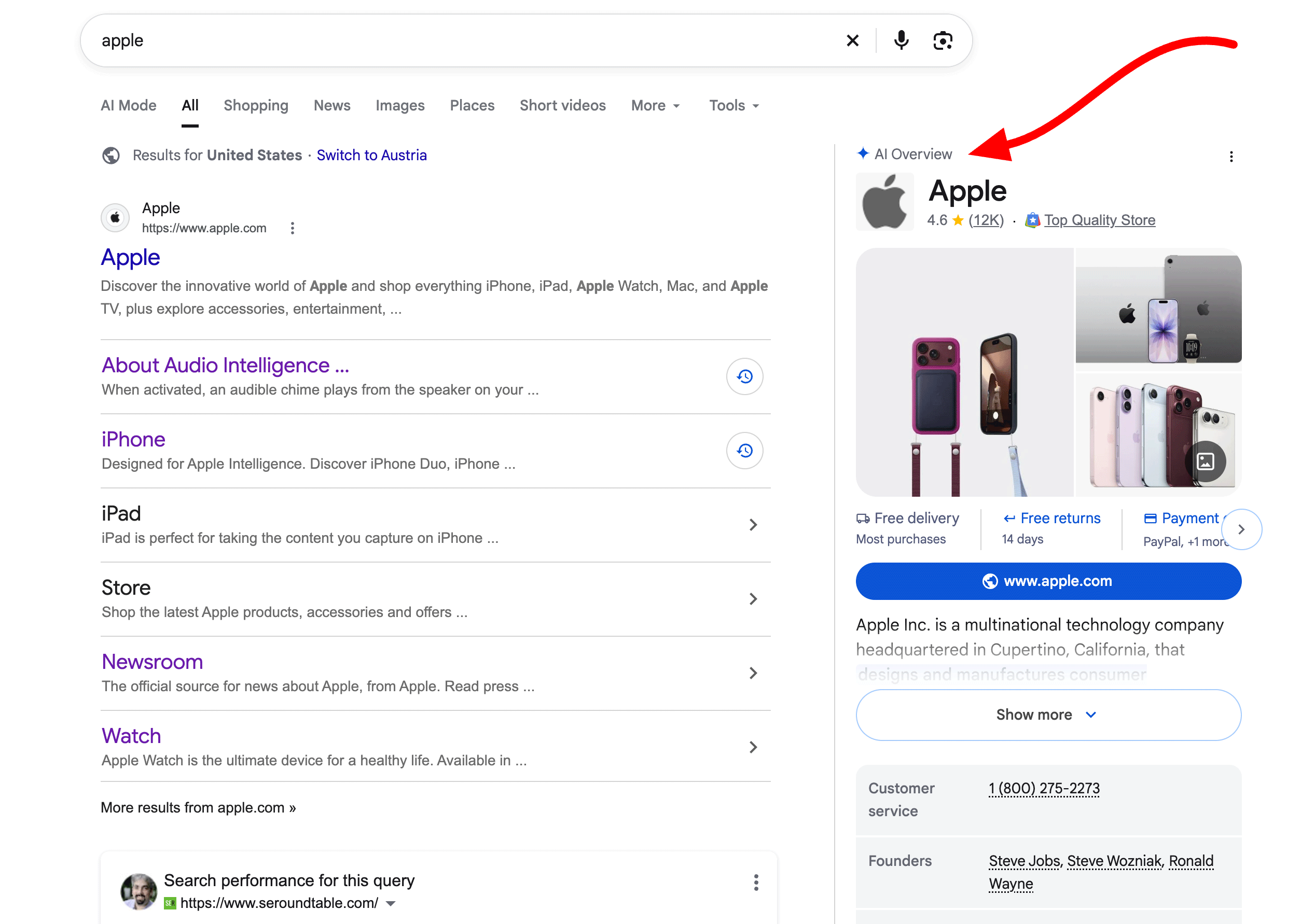
Google Moves Brand AI Overviews to the Right Column
Google is showing AI Overviews for many brand searches in the right-hand column, where Knowledge Panels used to sit. Brands now have less control over a prominent summary of who they are.

Google's Privacy Update Opens Gmail and Photos to Ad Targeting
Google has changed its privacy policy so that data from Gmail, Drive and Photos can inform personalized ads if you connect them to AI features like Personal Intelligence. Here is what marketers and business owners should understand and do.