
Digital Scams on the Rise: How Online Criminals Are Trapping Victims Worldwide
Top Digital Scams in 2025 and How to Stay Safe As digital technology becomes more embedded in daily life, so do the risks. A sharp rise in sophisticated online scams has sparked concern globally, with cybercriminals using everything from fake job offers to romance traps to exploit unsuspecting users. Fake Job Offers and Forced Labor […]
Rajesh Kumar · 19 Apr 2025 · 3 min read
Top Digital Scams in 2025 and How to Stay Safe
As digital technology becomes more embedded in daily life, so do the risks. A sharp rise in sophisticated online scams has sparked concern globally, with cybercriminals using everything from fake job offers to romance traps to exploit unsuspecting users.

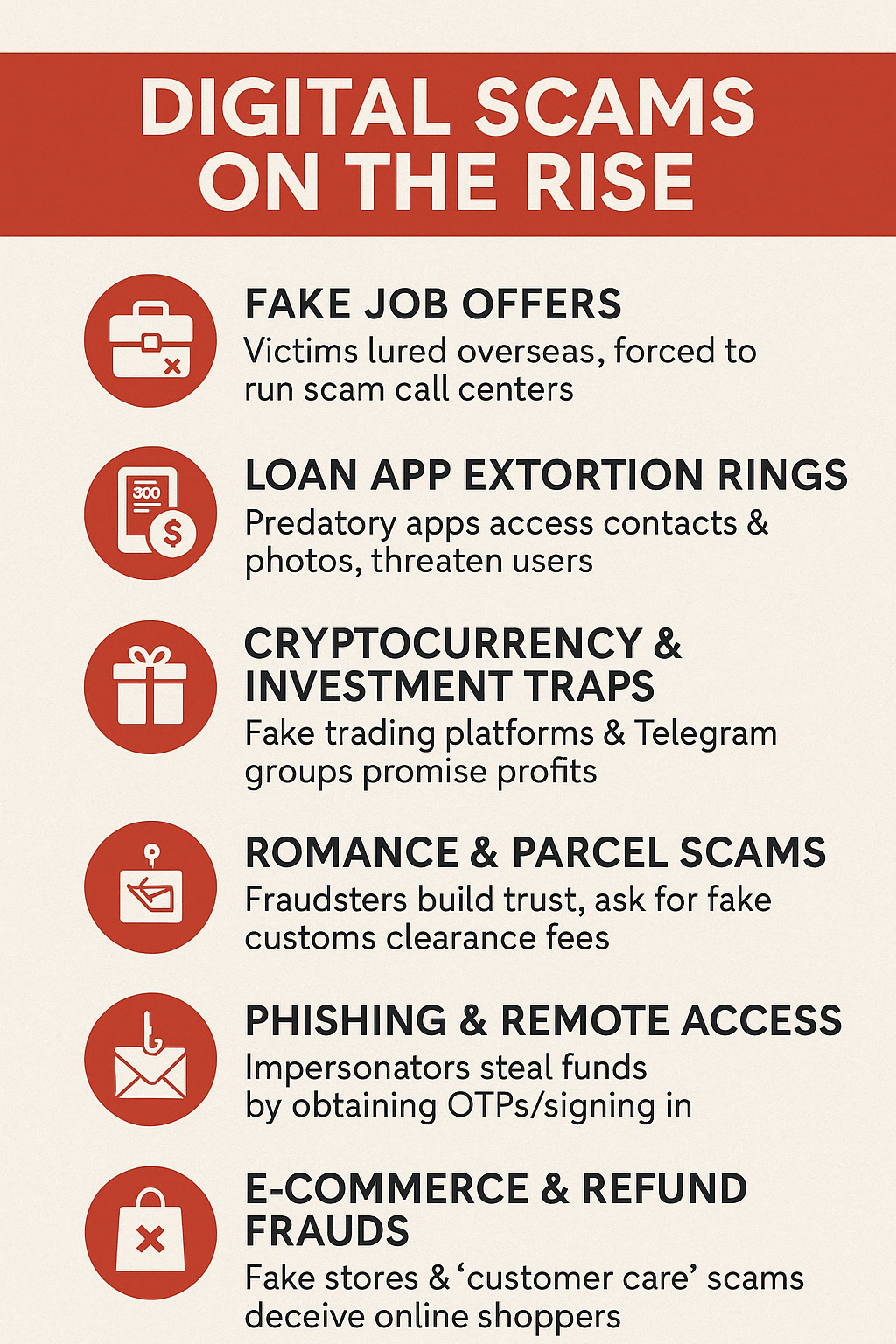
Fake Job Offers and Forced Labor

One of the most alarming trends involves job scams targeting individuals seeking overseas employment. Victims are contacted via social media platforms or messaging apps and offered attractive roles in customer service or IT. Upon arrival, many are trafficked to remote locations and forced to operate scam call centers. This tactic has been reported extensively in Southeast Asia, where dozens of foreign nationals have been rescued from such setups.
Loan App Extortion Rings

A surge in predatory loan apps has wreaked havoc in South Asia. These apps offer small loans with extremely high interest rates. Once users download them, the apps gain access to their contacts, photos, and messages. Victims are then threatened with public humiliation if they don’t repay, even if they’ve never accepted the loan.
Cryptocurrency & Investment Traps

Investment scams have evolved with the rise of cryptocurrencies. Fraudulent schemes promise guaranteed returns through forex or crypto trading platforms. A recent case involved victims being added to fake Telegram groups that showed fabricated profits, prompting them to invest large sums. Once the scammer disappears, the funds are unrecoverable.
Romance & Parcel Scams

Digital dating platforms are also becoming a hunting ground for scammers. After building trust, fraudsters pose as foreign nationals and claim to be sending expensive gifts. Soon after, victims receive calls from fake customs officers demanding “clearance fees.” This scam has affected thousands globally, especially targeting middle-aged women.
Phishing, Screen Sharing, and Remote Access

Scammers impersonate banks, telecom operators, or government officials. They trick victims into sharing OTPs or downloading remote access apps like AnyDesk, enabling them to steal funds. In one case, an elderly man lost his life savings after sharing login credentials with someone claiming to be from tech support.
E-commerce and Refund Frauds

Fake online stores and social media ads offer heavily discounted products, often using stolen images from real brands. Victims pay but never receive goods. Others are duped by refund scams where “customer care agents” ask for sensitive banking info to “process the refund.”
🔒 How to Stay Safe
-
- Never share OTPs or personal information over the phone.
-
- Avoid installing unknown apps or screen-sharing tools.
-
- Verify job offers through official websites.
-
- Use trusted platforms for shopping and loans.
Cybersecurity experts recommend enabling two-factor authentication, using strong passwords, and staying updated on scam trends. As scammers become more creative, awareness remains the first line of defense.
Want this applied to your business?
Related
ChatGPT Ads Earned $0.89 a Visit vs $2.45 for Google Search
A new working paper finds US ChatGPT ad visits brought in far less revenue than paid Google search visits. The gap suggests today's CPCs may be too high, though the data has real limits.

Meta Delays Business Terms After Publisher AI Scraping Backlash
Meta has pushed enforcement of its new business terms from October 30th to November 20th after publishers worried the terms could let it scrape news sites for AI training. The delay is a pause, not a resolution, and site owners should use it to review their own crawler controls.

Pennsylvania's AI Ad Label Law: What Marketers Must Do Now
Pennsylvania has signed a law requiring labels on ads significantly modified or generated by AI, in any format and regardless of where the ad was made. The wording leaves real gray areas, so marketers need a plan rather than a guess.