
Google Will Now Pre-Announce Major Ranking Updates
Google has launched a Ranking Hub in Search Central. It promises advance notice of significant ranking updates and policy changes via the Search Status Dashboard, and lets verified site owners send feedback through Search Console.
Rajesh Kumar · 26 Nov 2026 · 3 min read
- Google's new Ranking Hub promises advance notice of significant ranking updates and actionable policy changes via the Search Status Dashboard, which has an RSS feed.
- Verified owners can send feedback on a listed update through Search Console's Submit Feedback button using the update's hashtag, but Google will not make URL-specific manual fixes.
- The UK CMA rules, in force Dec. 17, set minimum notice of 30 or 15 business days for certain changes, but Google has not published its own day counts.
- Google says AI Overviews and other result types are judged by the same criteria as web listings.
- Google advises waiting at least one week of post-rollout data before analysing traffic changes.
What happened
Google has added a new Ranking Hub to Search Central. According to a report from Search Engine Journal, Google says it will give advance notice of two types of change through its Search Status Dashboard: significant ranking updates, such as core updates, and actionable policy changes, such as updates to content policies, technical guidelines or eligibility rules.
The dashboard will carry pre-announcements, rollout start dates and completion notices. It also has an RSS feed, so you can pipe alerts into your own monitoring.
The first example is already live. A dashboard entry dated Nov. 24 pre-announced a core update with December as the release window. The start date will be posted when the rollout begins.
The UK angle
Part of this is driven by regulation. Google says that for changes where UK users may see a significant ranking shift, it will give advance notice in line with the UK Competition and Markets Authority's fair ranking conduct requirements.
Per the CMA's summary, the minimums are:
- At least 30 business days' notice where publishers could act to avoid or reduce the impact on their rankings.
- At least 15 business days where rankings may move significantly but Google can explain what is changing and why.
These rules come into force Dec. 17, so they are not binding yet. Google's page mentions advance notice timelines but does not list the number of days. Treat the CMA figures as the regulatory floor, not a promise of how Google will behave globally.
Feedback through Search Console
Verified site owners can now submit feedback on a significant ranking change or policy update listed on the dashboard. You use the Submit Feedback button in Search Console and reference the change with a hashtag, such as #NovemberCoreUpdate2026.
Google suggests including:
- A snapshot of your Performance report.
- The queries and URLs affected.
- URLs of sites that appear to rank wrongly for those searches.
- How the change affected a UK market you operate in, where relevant.
The limits matter. Google says engineers review submissions in aggregate and do not make manual, URL-specific ranking changes. This is a signal channel, not an appeals desk.
Separately, from Dec. 17, sites serving UK users that were manually removed from Google's index entirely can file an appeal under the CMA requirements.
AI Overviews and equal treatment
Google's principles page says web listings and other results, including AI Overviews, carousels, images and videos, are evaluated using the same criteria, with no preferential treatment. It also says it makes no manual ranking adjustments except to meet legal obligations or enforce its Content Policies for Search.
That is a stated position, and it is hard to verify from outside. Still, it is useful to have it on record.
Why it matters
Until now, most site owners learned about a core update when traffic moved or when SEO Twitter lit up. A published pre-announcement does not tell you what will change, but it tells you when to freeze risky changes and when to start measuring.
For ecommerce, that matters a lot. If a core update lands in the weeks before peak trading, you want to know before you run a migration, a template overhaul or a large pricing-page rewrite. Otherwise you cannot separate your own changes from Google's.
What to do now
- Subscribe to the Search Status Dashboard RSS feed and route it to Slack or email for your SEO and ecommerce leads.
- Set a change-freeze policy for the rollout window. Avoid site-wide technical changes unless they are urgent.
- Capture a baseline before the rollout: Performance report data for top queries, landing pages and revenue-driving categories.
- Wait for the data. Google advises allowing at least one week of post-rollout data after an update is marked complete before analysing traffic changes.
- Document losses properly. If you submit feedback, use the hashtag, queries, URLs and examples Google asks for.
- Check your Search Console ownership. Only verified owners can submit feedback.
What this does not change
Google is not publishing the ranking factors or telling you how to recover. You still need to do the work: useful content, clean technical foundations and a site that deserves to rank. The notice gives you time, not an answer.
Google also published two generative AI pages the same day, one on controls for how content is used in its AI features and one on how AI Overviews and AI Mode select and link sources. If AI visibility is part of your strategy, read both.
Raj's takeThis is a welcome step toward predictability, but notice of when is not the same as clarity on what. Use it to run cleaner before-and-after analysis and avoid blaming Google for your own site changes. I would not expect the feedback form to rescue individual pages, so keep investing in the fundamentals.
Want this applied to your business?
Related
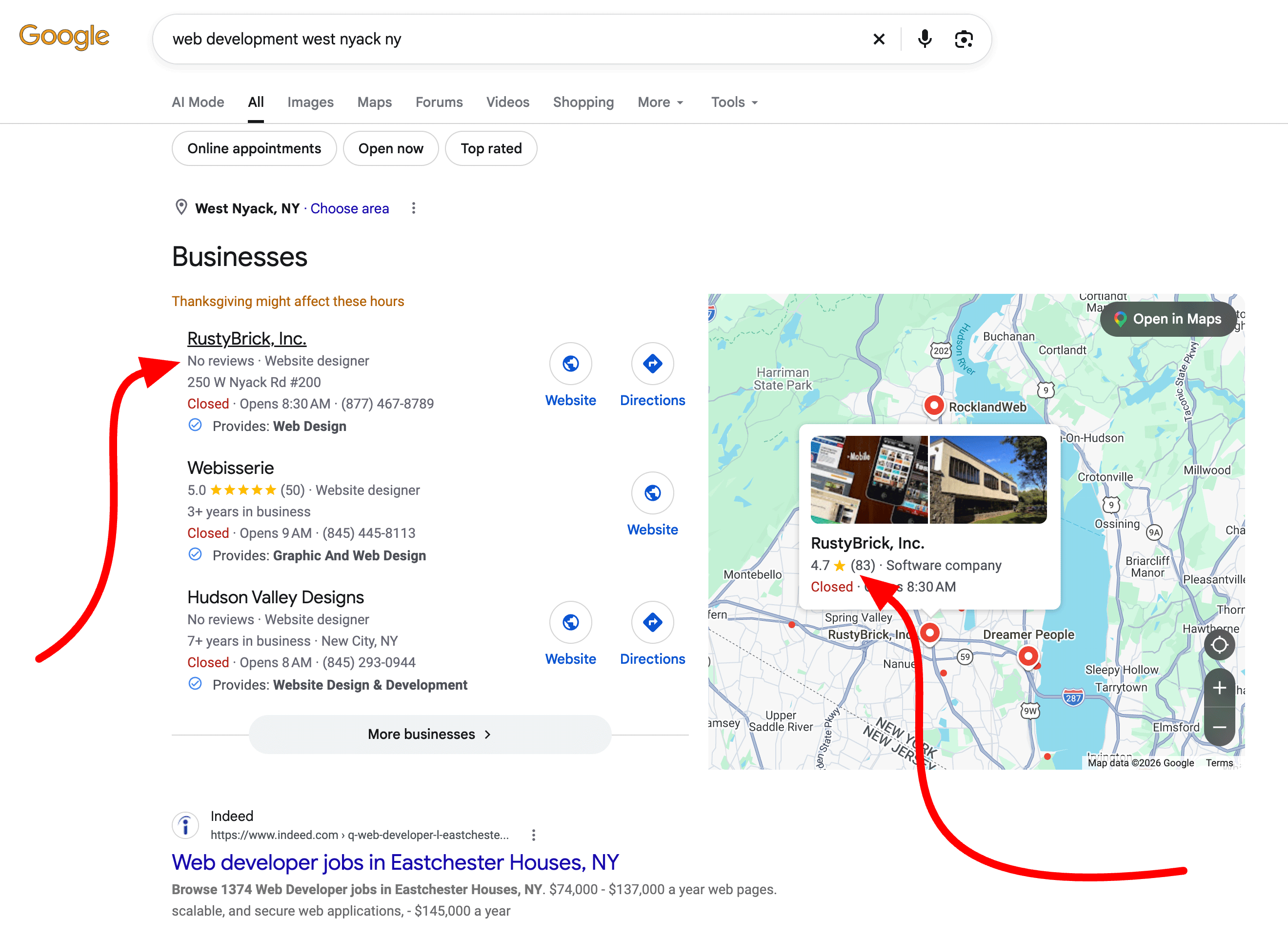
Google Local Pack Shows 'No Reviews' on Listings That Have Them
Google's local pack is showing 'No reviews' and no stars for some businesses that do have reviews. Clicking into the listing shows the real count, so this looks like a display bug rather than a lost-review problem.

WordPress /random/, Branded API Data and CDN Risks for SEO
WordPress 7.2 adds a default-on /random/ redirect, Search Console's API now splits branded queries, and Google warns that CDN migrations can accidentally block Googlebot. Most of the fixes sit outside the SEO team.

Why Real Experts Beat SEO Loopholes in the AI Search Era
Lily Ray argues that every SEO shortcut eventually expires, while investing in real, identifiable people has held up through each cycle. Her case rests on 20+ years of consistent Google guidance and the E-E-A-T framework.