
Amazon's World Product Graph: A Bid to Own Shopping Data
Amazon is reportedly planning a database of every product sold online, including items it doesn't sell. For brands and retailers, it could reshape how shoppers and AI agents discover products.
Rajesh Kumar · 15 Nov 2026 · 3 min read

- Amazon is reportedly exploring a 'World Product Graph' covering products sold across the internet, including items it doesn't sell.
- The aim is to keep shoppers and AI agents on Amazon instead of Reddit, Google or other research sources.
- The plan is uncertain: Amazon calls the document a brainstorming draft, and the reported release date is October 1st, 2027.
- Structured, accurate product data is becoming essential for visibility in both traditional and AI-driven shopping.
- Brands should audit product feeds, schema and bot access policies now rather than wait for a launch.
What happened
Amazon is reportedly working on a project called the "World Product Graph," according to Reuters, as relayed by The Verge AI. The idea is to build a huge database of product details for items sold anywhere on the internet, including products Amazon does not sell, and then surface that information on Amazon itself.
The goal, as described, is to stop shoppers leaving Amazon to do research on Reddit or Google. It is also meant to make sure that people searching for a product sold elsewhere still land on Amazon pages. The same logic applies to AI agents: if Amazon holds the biggest stockpile of shopping data, agents may lean on its index over others.
What we know and what we don't
Some pieces are already visible. Links to outside retailers' products have started appearing on Amazon through its "shop direct" feature, launched last year. Amazon also has its own AI shopping assistant, Alexa for Shopping, previously called Rufus.
An internal document reportedly says that many Rufus answers are factually wrong or incomplete, and that running shopper searches through the AI is expensive. More data is supposed to improve accuracy and allow cheaper models.
But this is far from confirmed. The document reportedly says the project depends on discovering how brands organize products on their own websites, which could involve crawling other retailers' sites. Reuters says it is unclear if or when the plan will be implemented, though the document lists an October 1st, 2027 release date. Amazon told Reuters that draft, outdated documents paint an incomplete picture and that a brainstorming document doesn't necessarily reflect current plans.
Treat this as a strategic signal, not a product launch.
Why it matters for visibility
Product research has been fragmenting. Shoppers check Reddit for honest opinions, Google for comparisons, and increasingly ask AI assistants. Amazon wants to pull that research loop back inside its own walls.
If it works, three things could change:
- Amazon becomes a research layer, not just a store. Your product could appear on Amazon even if you never sold there.
- AI agents may default to Amazon's data. If an agent needs structured product facts, the biggest and cleanest index tends to win.
- Your own site loses control of the narrative. Specs, pricing and descriptions might be interpreted and displayed by Amazon, not by you.
That last point is the real risk for independent brands. Being indexed is not the same as being visited.
Practical actions
Nobody needs to panic over a document with an uncertain release date. But the direction is clear: structured, machine-readable product data is becoming a competitive asset. Here is what I would do now.
1. Clean up your product data. Make sure titles, specs, sizes, materials, GTINs and pricing are consistent across your site, marketplaces and feeds. Messy data gets misread by crawlers and AI systems alike.
2. Use structured data properly. Product schema, availability, reviews and shipping information on your pages help any system, whether Amazon, Google or an AI agent, understand what you sell.
3. Check your robots and bot policies. Decide deliberately which crawlers you allow. Amazon has already been blocking at least one rival AI agent, per The Verge's related headlines, so expect access rules to become a strategic battleground.
4. Build content that data feeds can't replace. Comparison guides, real usage photos, fit advice, and honest reviews are what shoppers go to Reddit for. Own that content on your own domain and in communities.
5. Monitor how your products appear in AI answers. Regularly search for your products in ChatGPT, Gemini, Perplexity and Amazon's assistant. Note what facts they get wrong, and fix the source data.
6. Don't lean on one channel. If Amazon becomes the default data source for shopping agents, relying on it entirely gets riskier. Keep your direct traffic, email list and brand search growing.
The bigger picture
This is a data-ownership play. Whoever holds the most reliable product index gets to shape what AI shopping agents recommend. Amazon's internal admission that its assistant gets things wrong shows how much the quality of the underlying data matters, and how unfinished this space still is.
For sellers, the lesson is simple: your product information is now infrastructure. Treat it that way.
Raj's takeI read this less as a product announcement and more as Amazon admitting that whoever owns the cleanest product data wins the AI shopping era. Brands that keep their data tidy and their content genuinely useful will have options; those that depend on someone else's index will not. I'd prepare quietly, not panic.
Want this applied to your business?
Related
Meta and OpenAI Agents Drive Nearly 90% of Agent Traffic
HUMAN Security's October data shows Meta's Muse and OpenAI's agents sending almost nine in ten agent requests it tracked. Most hit product and search pages, few reach checkout, and identification is getting messy ahead of Black Friday.

ChatGPT Wallet Lets AI Agents Buy for Shoppers: What to Do
OpenAI has launched ChatGPT Wallet for Pro users in the US, letting Dots agents complete purchases with tokenized card details and biometric approval. For ecommerce owners, the real question is whether AI agents can actually check out on your site.
TikTok Shop Gets Its Own App in Southeast Asia
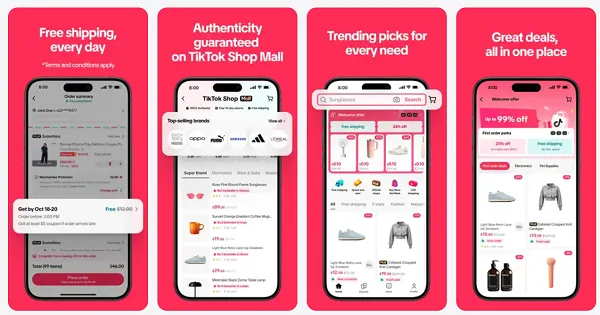
TikTok has launched a standalone TikTok Shop app in Singapore, Thailand, Malaysia and the Philippines. It is a bet that shoppers prefer a dedicated place to buy, not a video feed that sells.